

What Travelers Should Know: Spotting Exploitation and Choosing Alternatives in the Middle East
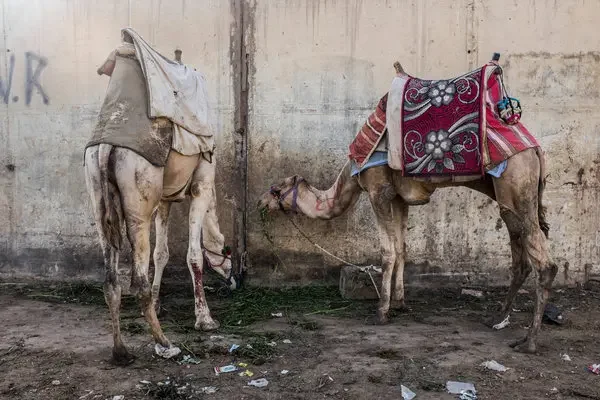
Travel often arrives as a promise: to witness history, to meet new people, to feel the scale of places that shaped human stories. Across the Middle East, that promise can be complicated by scenes many visitors find hard to reconcile with the wonder of monuments, deserts, and coasts. At archaeological sites, desert safaris, coastal resorts, and urban promenades, animals frequently appear as part of the visitor experience, with working equids carrying people up steep paths, camels posed for photographs, dolphins performing in tanks, and animals presented for staged photos. Investigations and reports from animal‑welfare organizations, including high‑profile exposés by groups such as PETA alongside local advocates and international media, have documented animals showing signs of exhaustion, untreated injuries, and chronic neglect: bodies and behavior reveal long hours, inadequate rest, and stress from repeated handling and confinement.
The reality on the ground
In many destinations across the region, horses, donkeys, and camels are pressed into long days of carrying tourists or pulling carriages in extreme heat. Desert safaris across the Gulf frequently include camel rides marketed as cultural experiences. Around the Pyramids of Giza and other Egyptian attractions, working equids and camels are commonly offered for rides and photos. In Petra and similar archaeological sites, animals are often part of the visitor circuit. Morocco features visible animal use tourism as well; horse-drawn caleches in Marrakech, donkeys and mules in medinas and mountain villages, and camel treks from Merzouga into the Sahara.
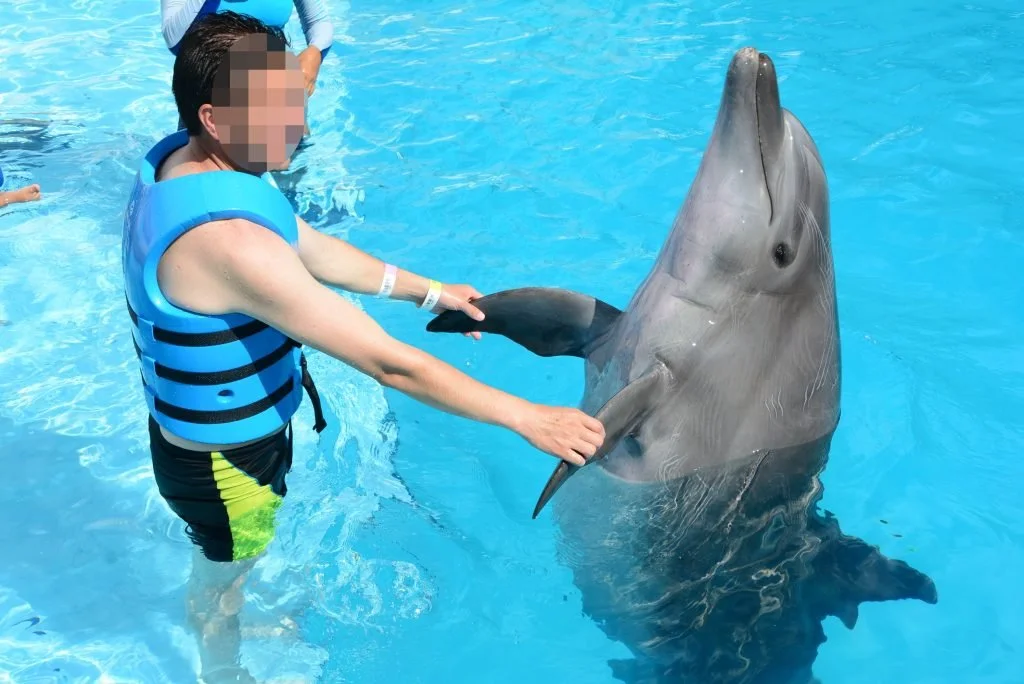
Coastal attractions present a related problem: facilities and shows that keep dolphins and other marine mammals in captivity, alongside swim‑with‑dolphin packages, have drawn scrutiny in places such as Hurghada and Dubai, where incidents and investigations have raised concerns about handling and confinement. Large, high‑profile marine parks in the Gulf, including newly opened marine theme parks, also feature interactive encounters.
Staged encounters and photo props in markets and promenades turn living beings into commodities and can feed wider problems such as trafficking and habitat pressure. These practices are embedded in local economies: handlers, drivers, and small businesses often rely on animal‑based income, and enforcement of welfare standards can be uneven. That economic reality complicates responses but does not justify exploitation; the focus for change is on replacing harmful systems with clear animal‑free alternatives.
Animal‑free alternatives
Using animals for profit and entertainment in ways that cause suffering is exploitation. That term centers the animals’ experience rather than treating them as scenery and clarifies the direction of change: the aim is to move beyond systems that rely on animals for spectacle and income. Recognizing exploitation reframes travel choices from neutral preferences into ethical decisions with consequences for animals, people, and places. Animal‑free options offer practical, dignified ways to experience the region without turning living beings into props. Electric shuttles, licensed vehicle services, and improved visitor infrastructure such as shaded walkways and ramps provide accessible transport to heritage sites. Guided walking tours and community‑led cultural programs highlight history, crafts, and local life while keeping income with people rather than animals. Accredited marine sanctuaries, rescue centers, and scientifically guided wild‑watching programs that enforce strict approach distances allow observation of marine life without captivity or harassment. Museums, interpretive centers, and immersive cultural experiences create meaningful encounters that do not depend on animals. Many of these alternatives already exist and can be expanded so that humane choices are the easy choices for visitors.
Practical choices that shift incentives
Individual decisions change market signals. Declining animal rides and staged photo setups withdraws direct financial support from exploitative systems. Choosing vehicle‑based access, walking tours, or animal‑free shuttles redirects spending to humane services and local people. Favoring accredited facilities and operators that publish transparent, animal‑free policies helps make better practices visible and economically viable. When abuse is observed, documenting safely and sharing verified information with reputable local organizations builds evidence for change without escalating conflict. Supporting local rescue groups, veterinary clinics, and programs that create alternative livelihoods for handlers helps communities transition away from dependence on animal exploitation.
Collective roles and an invitation
Meaningful change happens when tourism authorities, heritage managers, hotels, travel platforms, tour operators, NGOs, and communities act together. Authorities can expand animal‑free access and fund retirement and care programs for animals no longer able to work. The private sector can stop promoting exploitative attractions and highlight certified, animal‑free experiences. NGOs and community groups can pilot humane alternatives and provide training that shifts income away from harmful practices. Civil society can amplify verified investigations, publish vetted guides to animal‑free experiences, and channel support to local rescue and rehabilitation work.
Travel can remain a source of wonder without turning living beings into commodities. Readers are invited to refrain from participating in attractions that rely on animals for profit or entertainment, to favor animal‑free experiences, and to support local efforts that create humane, sustainable alternatives. Small decisions by many visitors can help preserve both the dignity of animals and the cultural and natural treasures that draw people across the Middle East. When travelers, communities, and organizations align around compassionate, animal‑free choices, the region’s monuments, deserts, and seas can be experienced in ways that honor both people and animals.