

The Middle East's Plant-Based Heritage: A Culinary Legacy That Can Inspire the World
Plant-based meals are often presented as a modern response to today's environmental, health, and ethical challenges. Yet in countries such as Lebanon, Syria, Palestine, Jordan, Egypt, Iraq, and across North Africa, plant-based meals have been part of everyday life for generations. Long before terms such as "vegan" and "plant-based" entered mainstream conversations, families gathered around dishes such as Hummus, Tabbouleh, Baba Ghanoush, Falafel, Fattoush, Muhammara, Yalanji, Mujadara, Ful Medames, Koshari, Maqluba, Mahshi, Malfouf, Adas bi Hamod, Bamia, and Molokhia. Celebrations and festive occasions were also enriched by traditional sweets such as Meghli, Qamhiyeh, Maamoul, Maakaron, and Zlabia, demonstrating that plant-based traditions have long extended beyond the main course. These foods were not created to follow a modern dietary trend. They became staples because they were nourishing, affordable, flavourful, and deeply rooted in local culture. Inspired by the ideas explored in How Middle Eastern cuisine could shape the future of food, these traditions deserve renewed attention.
What makes these plant-based meals particularly valuable is that they are more than recipes. They are part of the region's culture, history, and identity.
Food has always played a central role in family gatherings, hospitality, and community life.
Recipes are passed from one generation to the next, carrying stories, traditions, and a sense of belonging that extends far beyond the dining table.
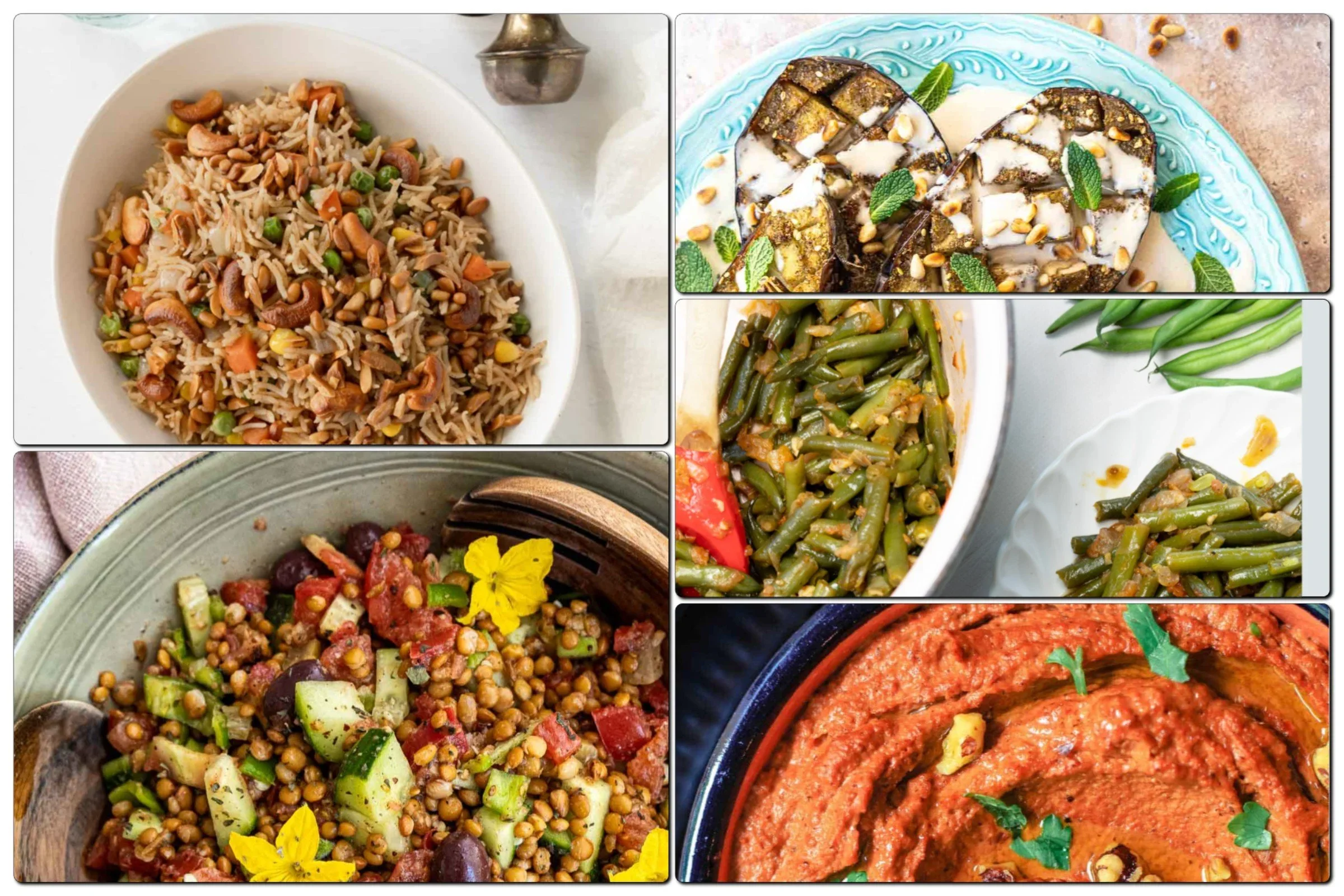
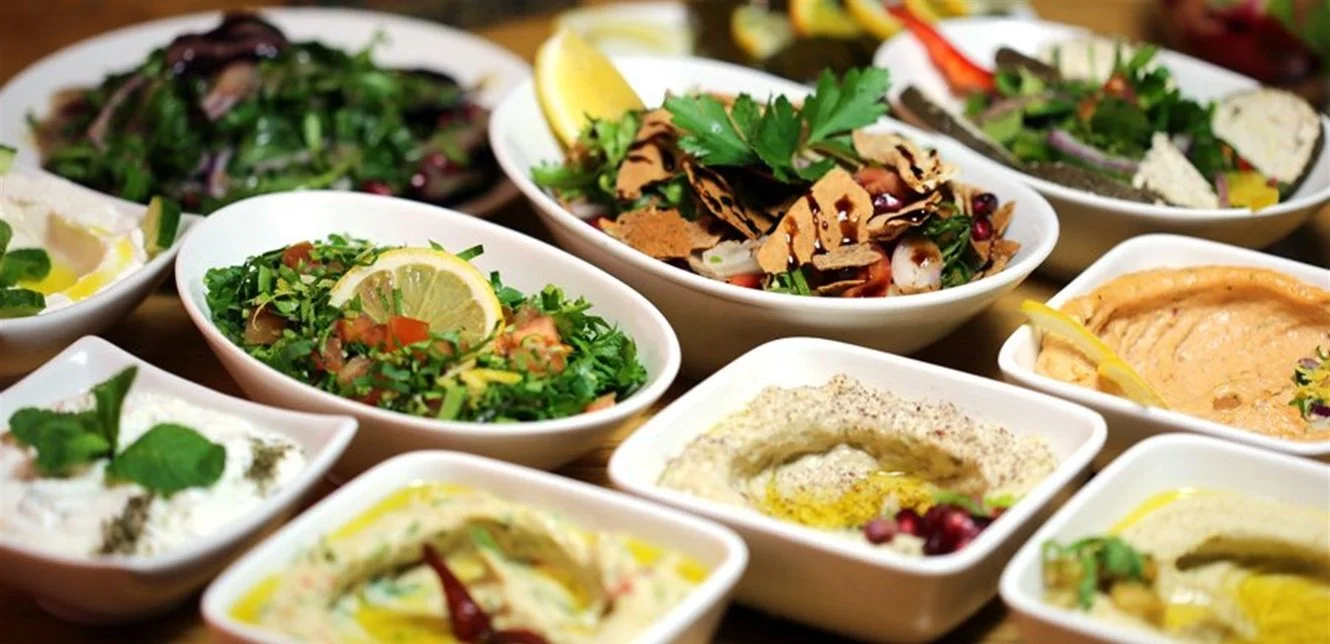
Perhaps nowhere is this more evident than in the tradition of mezze.
Throughout the Middle East and North Africa, meals have often celebrated abundance through variety rather than focusing on a single centrepiece. Tables are filled with Hummus, Baba Ghanoush, Muhammara, Fattoush, Tabbouleh, Yalanji, and countless other dishes shared among family and friends. This communal approach to dining demonstrates that some of the region's most cherished food traditions have always centred on grains, legumes, vegetables, herbs, olive oil, and other plant foods. As explored in Middle Eastern Mezze Traditions: A Hidden Plant-Based Abundance, abundance has traditionally been measured through variety, flavour, and hospitality rather than through animal products.
A Culinary Heritage Built on Plant-Based Meals

The richness of Middle Eastern cuisine can be found in the diversity of its plant-based meals.
In Lebanon, tables are often filled with Hummus, Tabbouleh, Baba Ghanoush, Fasolia bi Zeit, Makdous, Khubeiza, and Baqleh. Syrian cuisine offers beloved dishes such as Mujadara, Muhammara, Yalanji, and Makdous. In Palestine, Maqluba and Maftoul showcase the creativity of traditional plant-based cooking. Jordan contributes dishes such as Falafel, Fatteh, and Qalayet Bandora, while Egypt is renowned for Ful Medames, Ta'ameya, Koshari, and Molokhia. Iraq's culinary traditions include Bamia, Salona, and Torshi, while North African countries enrich the regional food landscape with Couscous, Zaalouk, Harira, Lablabi, Mechouia, and H'miss.
These traditions demonstrate the extraordinary range of plant-based meals that have long existed across the region.
What connects these dishes is not only their ingredients but also the cultural values they represent. They reflect resourcefulness, seasonality, hospitality, and a deep appreciation for local produce. They show that plant-based meals are not a modern invention or a foreign concept. They are woven into the culinary fabric of societies that have relied on legumes, vegetables, grains, herbs, and olive oil for centuries.
Plant-Based Traditions Extend Beyond the Main Course

The region's plant-based heritage does not end with savoury dishes. Many traditional desserts enjoyed during celebrations, religious holidays, and family gatherings are also naturally plant-based or can be easily prepared using plant-based ingredients.
Across the Middle East, festive sweets such as Meghli, Maakaron, Qamhiyeh, Maamoul, and Zlabia have long been associated with hospitality, celebration, and community. They are more than desserts; they are memories, rituals, and cultural traditions passed from one generation to the next.
Meghli, the fragrant rice pudding prepared to celebrate the birth of a child, demonstrates how compassion and tradition can coexist naturally. Qamhiyeh, made from wheat and aromatic spices, has long been shared among families and neighbours during special occasions. Maakaron, Maamoul, and Zlabia similarly illustrate how some of the region's most cherished festive foods can be enjoyed without relying on animal-derived ingredients. These desserts show that plant-based traditions are woven into celebrations just as deeply as they are into everyday meals.
Together, these sweets tell the same story as the region's savoury dishes. Whether gathered around a mezze table filled with Hummus, Fattoush, Baba Ghanoush, and Falafel, or sharing bowls of Meghli and plates of Maamoul during festive occasions, generations have demonstrated that some of the Middle East's most beloved foods have always showcased the richness and diversity of plant-based cuisine.
Rediscovering Traditions in a Changing World
In recent decades, dietary habits across much of the region have changed. Processed foods have become more common, and meat consumption has increased in many areas. At the same time, concerns about health, sustainability, food security, and animal welfare have become increasingly urgent. According to Martin Keulertz, traditional dishes such as Mujadara, Hummus, Tabbouleh, and Ful Medames closely resemble the plant-rich diets increasingly recommended by researchers studying sustainable food systems.
This presents a unique opportunity. Rather than looking exclusively towards new technologies or highly processed alternatives, people can reconnect with meals that already form part of their cultural heritage. Plant-based eating does not have to mean abandoning traditions. In many cases, it means embracing them.
Plant-based meals and desserts celebrated throughout the Middle East and North Africa have always demonstrated how satisfying, nourishing, and flavourful eating can be.
Looking Forward by Looking Back
As the world continues searching for solutions to the challenges facing our food systems, the Middle East has something valuable to contribute. The answer may not always lie in creating entirely new foods or persuading people to adopt unfamiliar eating habits. Sometimes the most powerful ideas are already present in the traditions that communities have preserved for generations.
Every plant-based meal represents an opportunity to reduce reliance on animal agriculture and the suffering associated with it. Choosing Hummus instead of a meat-based spread, Mujadara instead of an animal-based main dish, or a mezze table rich in vegetables, legumes, and grains can help create a food system that is kinder to animals while preserving cultural traditions.
The future of food may not be something we need to invent. It may already be on the Middle Eastern table. This is not about rewriting the region's culinary history. It is about recognising and celebrating a part of that history that has often been overlooked. Many of the foods that people associate with comfort, family, tradition, and celebration are already plant-based.