

Interview With Said Jiryes, Co‑Founder of Jordanian Vegans
We had the chance to interview Said Jiryes, co‑founder of Jordanian Vegans, about the journey of building Jordan’s first dedicated vegan activist community. Alongside Dana Sawalha and Dalia Odeh, Said helped establish Jordanian Vegans in 2021, creating a platform for documentary screenings, protests, street outreach, and social media campaigns.
Since then, their activism has expanded to initiatives such as Vegans for Palestine, participation in the Amman Vegan Festival 2024, and solidarity projects like the Flavours of Freedom e‑book fundraiser.
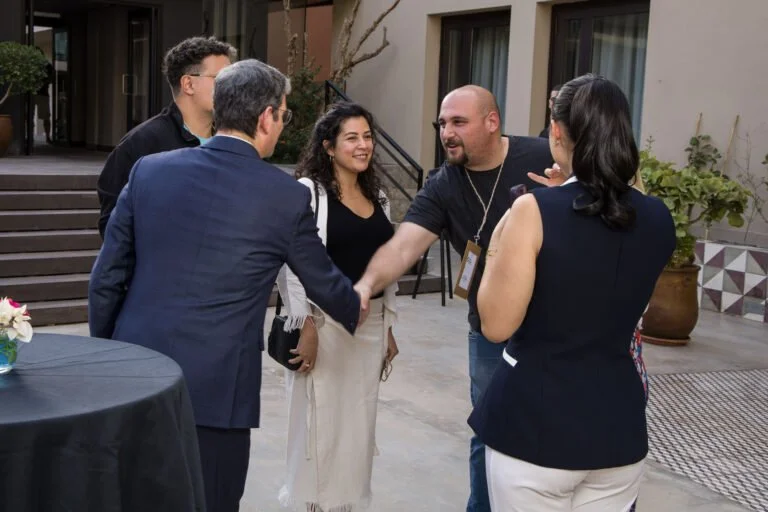
His work has also reached the international stage, representing Jordanian Vegans and Vegans for Palestine at the Animal World Politics Conference hosted by the Party for the Animals in the Netherlands, where activists and parliament members gathered to exchange ideas on justice, empathy, and resilience.
But what inspired Said’s personal shift to veganism? How does he connect animal rights with broader struggles for justice? And what message does he want to share with the Middle East Vegan Society community?
What inspired your initial shift to veganism and what pushed you toward activism?
Initially, I went plant‑based because I was looking for healthier ways to eat. That was before I completely understood what veganism was, and the shift was surprisingly fast. I felt like this blindfold that I kept pulling back over my eyes started lifting. I worked on educating myself on all angles of veganism. This education was very intense in the first week, and I learned a lot.
What inspired me to speak on behalf of the voiceless victims was a documentary that was basically hidden‑camera footage from slaughterhouses and factory farms, with narration describing what was happening.
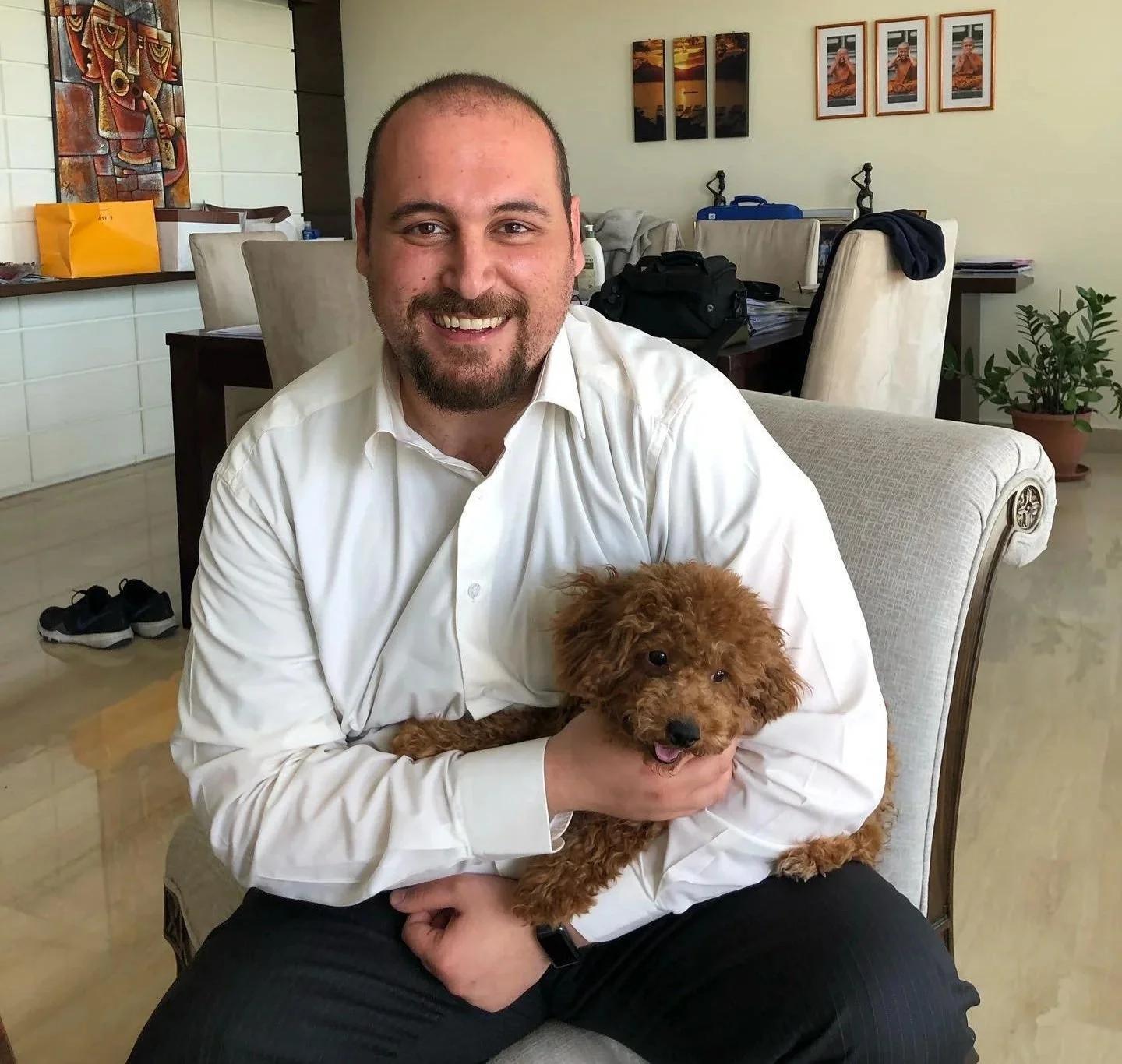
Usually I’m not an emotional person, but during that documentary I was horrified and wept my eyes out. I forced myself to watch until the end, and although it was painful, it was liberating at the same time.
It made me start searching for groups to do activism with and asking all the Jordanian vegans I met through social media about it, but I never got anywhere. So I went back to the people I had talked to and asked if they were interested in doing animal rights activism, and that’s how our community started.
You established Jordanian Vegans in 2021. What kinds of activities have been most impactful, and what challenges do you face in promoting veganism in Jordan?
I think the most impactful activities were documentary screenings and then sharing delicious vegan food with the attendees.
As for the challenges, I believe there are similar challenges around the world, mainly cognitive dissonance. But specific to Jordan, people often go back to religion to find justifications. I understand that a lot of this comes from cognitive dissonance, so instead of arguing, we try to ask questions that shed light on that dissonance and allow the person we’re talking to to come to their own conclusions.
In what ways do you link animal rights activism with broader struggles for justice in the region?
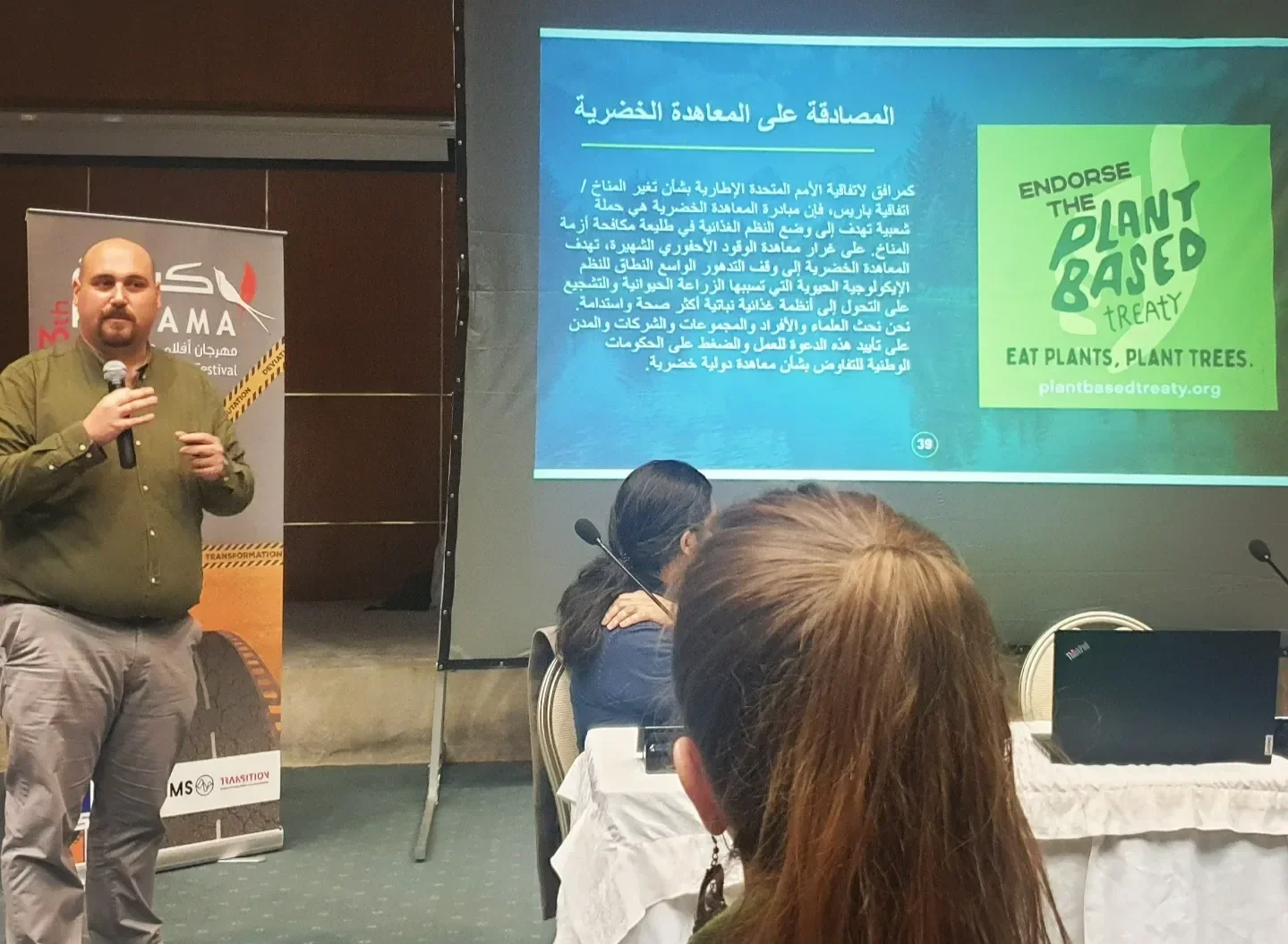
One of my favourite quotes is,
“If you don’t have peace on your plate, how can you have peace in the world?”
Veganism, in my eyes, should be intersectional. At the beginning of the genocide in Gaza, I saw a news story about the IOF saying, “We have given our vegan soldiers vegan leather boots,” while those same soldiers wear them and go bomb children and innocent people.
This triggered something in me and my fellow activists from around the world and we decided to start Vegans for Palestine. We wanted to shed light on the veganwashing, greenwashing and pinkwashing that the IOF was doing, trying to show that they are inclusive and “the most moral army in the world,” while committing these atrocities.
Our target audience at VFP was mainly animal rights activists who were not intersectional at all. We wanted there to be a voice saying that you can’t stand against one form of injustice while staying silent about injustices and genocides around the world.
Free Congo, Free Sudan, Free Palestine, and power to all the people suffering injustice in this very unjust world.
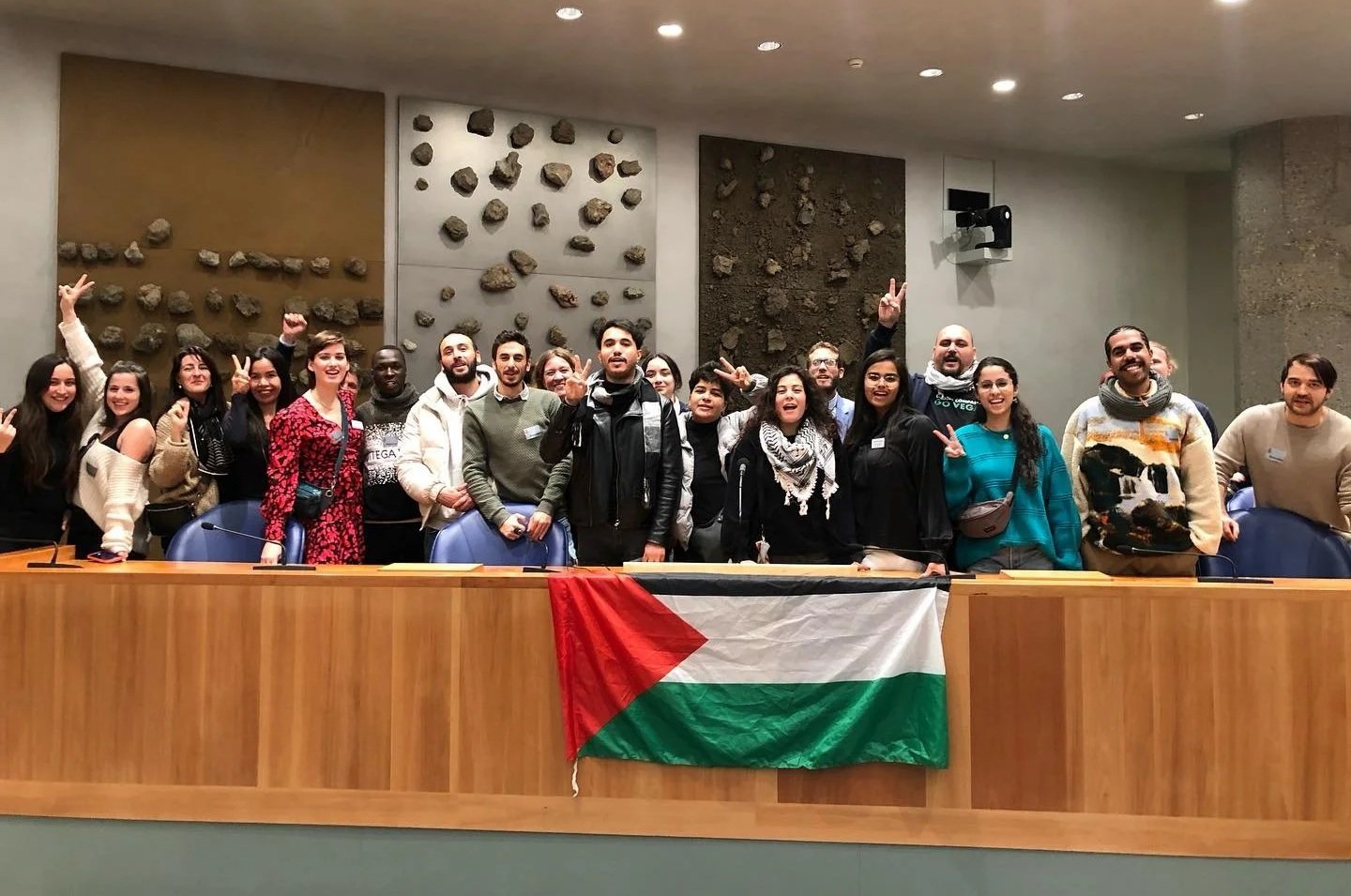
Said Jiryes, representing Jordanian Vegans and Vegans for Palestine at the Animal World Politics Conference hosted by Party For The Animals
What drew Jordanian Vegans to contribute to the Flavours of Freedom e‑book?

Flavours of Freedom was part of a collaborative fundraising effort with some of the members of VFP to raise funds to feed families and distribute essential supplies in Gaza.
50% of the funds went to PCRF and 50% went to Sulala Animal Rescue in Gaza. I remember we were able to raise over $20,000 through that project.
What message would you like to share with the Middle East Vegan Society community and readers across the region?
My message would be to speak up and get active. Veganism is not just about what we eat, it is about standing against injustice and extending our compassion to all sentient beings.
Find your community, and if you can’t find one, build one. Keep planting seeds, even if you don’t always get to see them grow.
Conclusion
The interview with Said Jiryes reflects the strength of grassroots activism and the importance of building communities rooted in compassion. His work with Jordanian Vegans shows how local initiatives can grow into movements that connect animal rights with broader struggles for justice and solidarity.
Reflecting on his participation in the Animal World Politics Conference, Said emphasized the importance of choosing battles wisely and building solidarity across struggles. Surrounded by global activists, he found overwhelming support for Palestine and a shared commitment to empathy and peace; lessons that continue to shape his vision for Jordanian Vegans and the broader movement.