

Interview with Georges Achkar Salame: Progressive Abolitionist and Founder of Al Nahda
Georges Achkar Salame is a progressive, abolitionist Lebanese vegan activist and the founder of Al Nahda political movement. His activism began with a deep ethical awakening that led him to speak out across multiple platforms, from social media and TV programs to street demonstrations and podcasts.
Through Al Nahda, a movement focused on human rights, animal liberation, and nature preservation, Georges has worked to embed these values into politics, linking Lebanon’s movement with international networks, including conferences organized by Party for the Animals, where activists and parliamentarians across the globe exchange strategies for building a more compassionate and sustainable future. Locally, Al Nahda has organized initiatives such as the “Legal Landscape of Animal Rights in Lebanon” workshop (2023), hosted at Lebanese Vegans, where legal experts examined existing laws and the urgent need for stronger protections, as well as the debating workshop competition hosted at Lunas Village.
1. What experiences first led you into activism, and how do you explain the connection between human rights and animal rights?
The first experiences that led me into activism began when I realized what I see as a fundamental lie we are told from childhood.
It is a narrative reinforced through societal norms, social media, and advertising: that animals are comfortable being slaughtered for food, that they are happy in this process, that this is simply how the world works and should be accepted without question, and that humans cannot live without consuming animal products, making it, therefore, ethical by necessity.
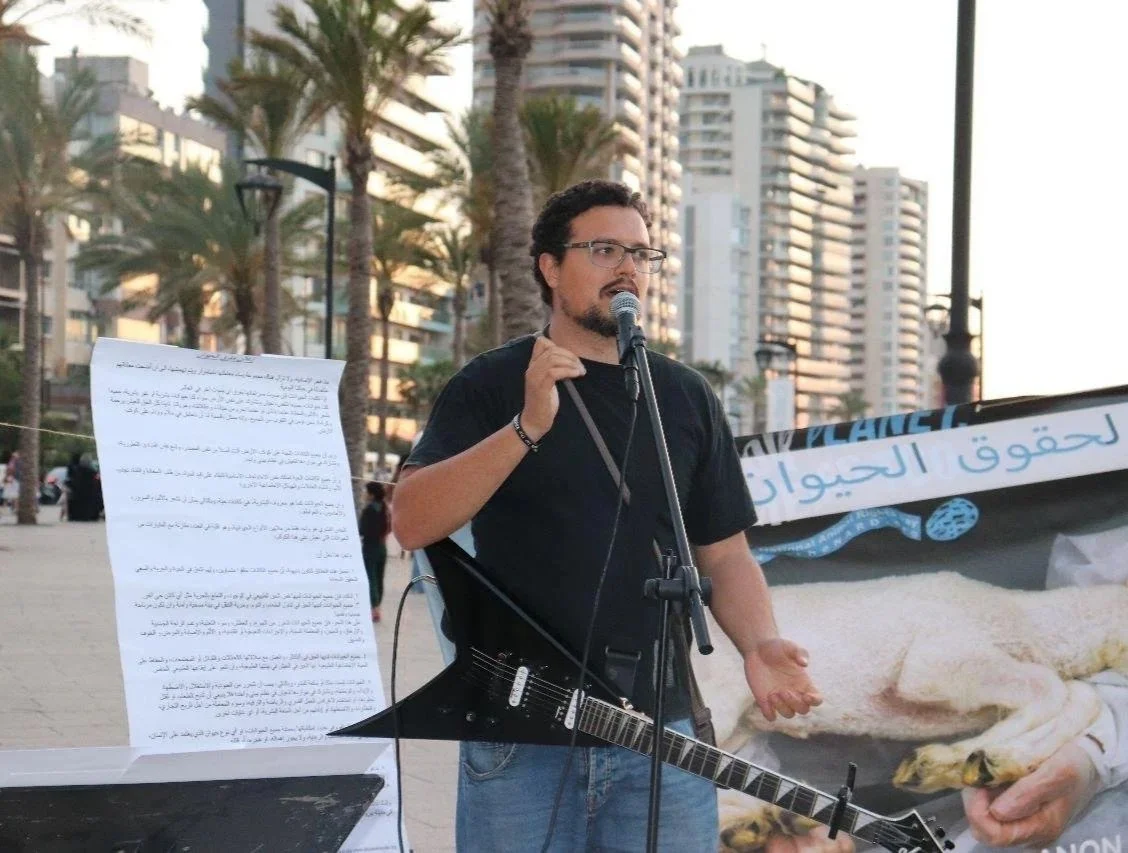
We are often told that this is the natural order of things, or even how God intended it, and that there is no real alternative or way to change it. When I came to understand that this was not a truth but a constructed belief, and that human beings can not only live without killing animals, but thrive without consuming their dead bodies, it profoundly shifted my perspective.
This realization led me to what I can only describe as a spiritual awakening. For me, veganism is inseparable from that awakening and became the foundation of my activism.
Regarding the relationship between human rights and animal rights, I see them as fundamentally one and the same. The core issue in all cases is the existence of a sentient being, a conscious soul capable of feeling, perceiving, experiencing the world, and suffering.
Whether human or non-human animal, what matters is not the species but the presence of consciousness. Justice, in my view, applies to that conscious experience regardless of the form it takes. I believe all souls are equal in this sense. Whether that consciousness exists in a pig, a cow, a giraffe, or a human being, the moral consideration remains the same.
Ultimately, the struggle is not a set of separate or related causes, it is one and the same struggle: a fight against injustice and against the suffering of sentient beings.
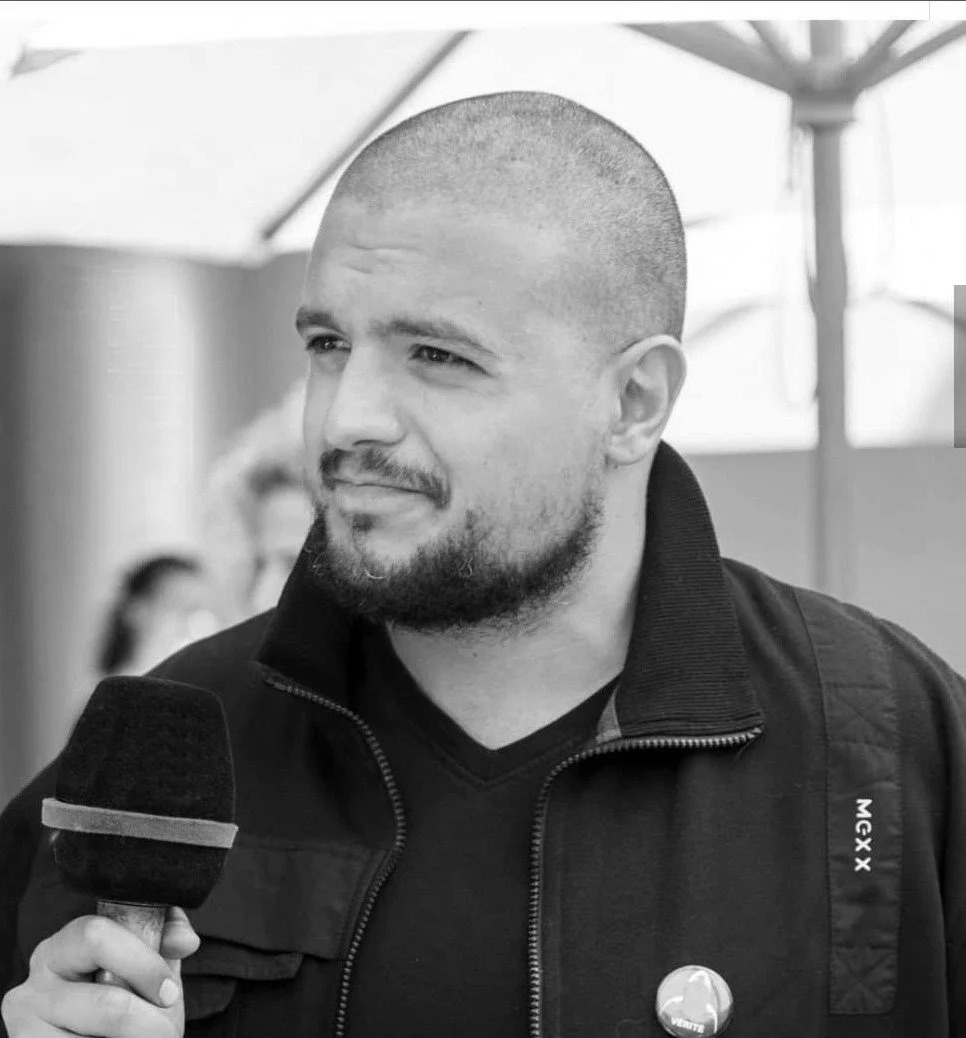
“I am not just an animal rights activist, I am also a human rights activist, and they do not supersede each other — on the contrary, they complement each other. Ultimately, what people are truly interested in is justice, and everything is connected.” - Georges Achkar Salame
We are all here together, experiencing the same unknown. The universe has existed for an unimaginable span of time, and what unites us is this shared presence.
In that sense, the most reasonable response to this uncertainty is kindness toward one another. In a world where we do not know why we are here or where we are going, it seems illogical to choose violence, cruelty, or indifference. Instead, the most coherent way to live is with compassion.
Rather than making each other feel trapped in existence, we can choose to transform this shared moment into something meaningful—by approaching life as a gift and by extending that sense of care and responsibility toward all beings who share it with us.
2. What inspired you to establish Al Nahda, and what makes it unique compared to traditional Lebanese parties?
The inspiration behind establishing Al Nahda came after years of activism, as well as numerous conferences, awareness campaigns, debates, and public discussions. Over time, we came to a clear realization: while some individuals are open to change and can be convinced through dialogue and evidence, many others remain deeply influenced by habit, sensory pleasure, and the psychological conditioning associated with consuming animal products.
This led us to a broader ethical question: what do we do when harm is justified by pleasure?
To illustrate this, consider a simple example. If a person derived pleasure from shooting dogs, would society allow it simply because it brings them satisfaction? Or would there be a legal framework that prohibits such actions because they violate the principle of justice? In most societies, the answer is clear: certain actions are inherently wrong, regardless of the pleasure they may provide to the perpetrator.
We apply this logic in many areas of law. Laws against human violence or sexual abuse exist not because every individual must first be personally convinced of their immorality, but because society recognizes the need to protect victims. An aggressor may still derive pleasure or fail to accept that their actions are wrong, yet the law intervenes regardless. Justice, in this sense, cannot depend solely on individual agreement.
From this perspective, we see the killing and consumption of animals as an ethical issue that goes beyond personal belief or taste. Even if individuals derive pleasure from it, pleasure alone does not justify harm, particularly when such harm is unnecessary for human survival.
Al Nahda was therefore founded as a movement centered on justice through law. It is a progressive abolitionist movement that seeks to transform legal frameworks over time, with the long-term goal of ending all forms of institutionalized harm toward animals. While we recognize that change must be gradual and strategic, our vision is clear: a future in which the killing and exploitation of animals is no longer legally permitted.
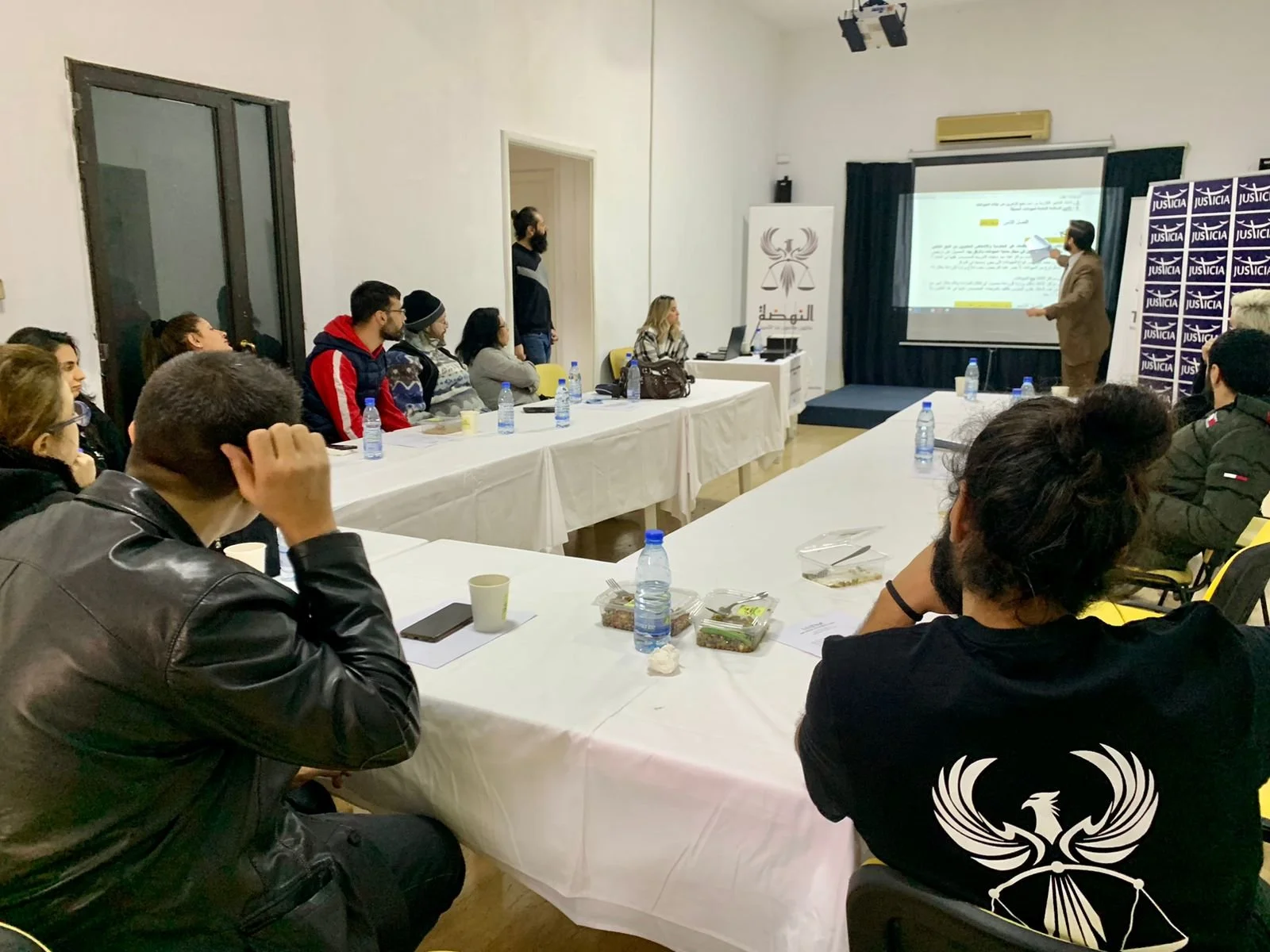
Lawyer Fares Abou Khalil from Justicia speaking during a workshop organized by Al Nahda, where he explained Lebanon’s animal protection Law No. 47/2017, the legal framework surrounding animal rights, and how these laws can evolve through legal action and policy reform.
In such a future, acts of violence toward animals would not be treated as morally optional or culturally relative, but as violations of justice, subject to legal consequence.
Ultimately, what inspired Al Nahda is a simple but fundamental conviction: justice cannot rely solely on persuasion. While education, dialogue, and awareness are essential, they are not always sufficient. There are moments when victims must be protected regardless of whether the perpetrator is convinced. Laws exist precisely for this reason.
Al Nahda was created to reflect that principle—bringing animal ethics into the realm of enforceable justice, rather than leaving it solely to individual interpretation.
In terms of how Al Nahda compares to traditional Lebanese political parties, we view the current political landscape as a direct consequence of Lebanon’s history of conflict. Many of the political forces that exist today are rooted in the dynamics of the Lebanese Civil War, where wartime factions and armed groups gradually transformed into political entities.
From our perspective, this transition did not necessarily produce conventional political parties operating within a fully institutional or civic framework. Rather, many of these structures continue to reflect the logic of power that emerged during the war, often characterized by sectarian influence, patronage networks, and systems that resemble organized, interest-driven power blocs more than traditional democratic political institutions.
For this reason, we do not see Al Nahda as comparable to these parties, and we do not seek to be placed within the same category. Al Nahda is fundamentally different in its nature, objectives, and ethical foundation. It is not built on wartime legacy, sectarian alignment, or power-sharing dynamics, but on a principled framework centered on justice, especially as it relates to the protection of sentient beings.
Our focus is not on reproducing existing political models but on rethinking the role of law and ethics in society in a way that extends moral consideration beyond humans alone. In that sense, Al Nahda stands apart both in its philosophy and in its vision for social and legal change.
3. You have represented Al Nahda in international gatherings, including conferences organized by Party for the Animals. What insights did you gain from these exchanges?
We have represented Al Nahda in several international conferences and gatherings, including events in Brussels, Belgium, the Netherlands—such as Eindhoven, Amsterdam, and The Hague—as well as Morocco and various local initiatives.
One of the key insights gained from these exchanges is that political movements advocating for animals are not isolated phenomena limited to a few countries. On the contrary, they exist in many parts of the world and are increasingly becoming part of formal political systems.
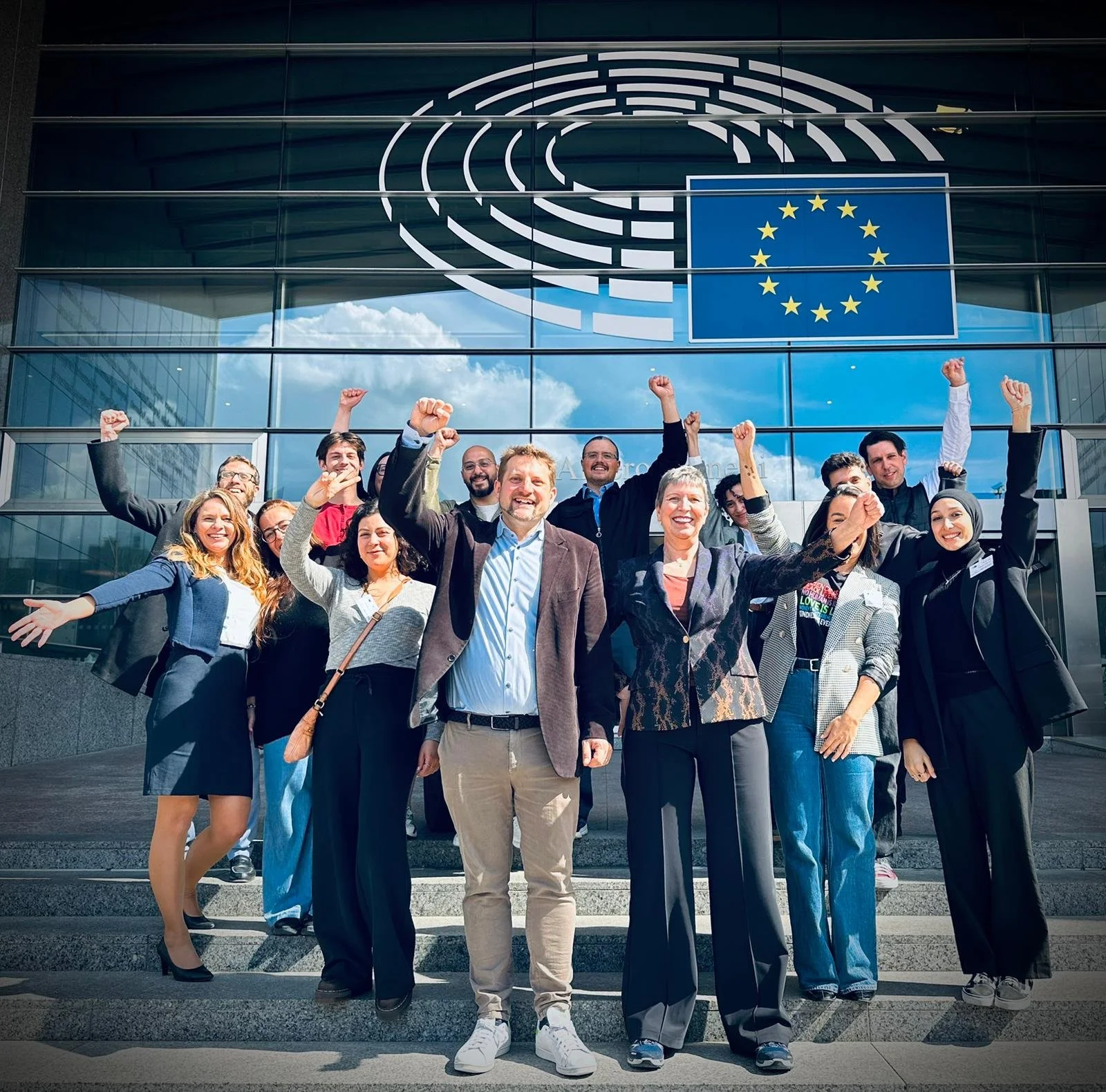
With European Parliament members Anja Hazekamp and Sebastian Everding in front of the European Parliament, following a joint exchange visit with Al Nahda’s delegation inside the Parliament. The visit also brought together delegations from PACMA (Spain), Hakim (Turkey), and Adan (Morocco), fostering dialogue and cooperation on animal rights across regions.
For example, there is the Animal Welfare Party in the United Kingdom, the Animal Justice Party in Australia and New Zealand, the Parti Animaliste in France, and parties such as DierAnimal in Belgium, Pina in Moldova, and Noa in Romania. Pacman in Spain, Animal Party Cyprus, Animalism Party Japan, EOP Finland, Greek Party for the Animals, and Pan in Portugal, who have already secured a seat in parliament. In the Netherlands, the Party for the Animals has 3 seats in the Dutch parliament, 1 seat in the European parliament, and many other seats in municipalities and city councils. Germany's Party for the Animals has also secured seats in the German parliament as well as the European Union.
Some of these parties are already actively shaping legislation. In Switzerland, for instance, proposals concerning the complete ban of factory farming have reached advanced political stages and, at certain points, were close to passing with only a small margin of votes remaining. Also, labeling regulations in Switzerland require meat products to indicate how animals were killed, including whether slaughter occurred without pain relief, which demonstrates the tangible political impact of such movements.
We also see concrete policy changes taking place across different countries. In Amsterdam, for example, advertising for meat products has been banned in public spaces, a decision that resulted directly from political action. In other cases, funding previously directed toward practices such as bullfighting in Spain has been discontinued due to political pressure and advocacy.
These developments illustrate that political engagement for animal rights is not only symbolic but can lead to measurable legal and structural change.
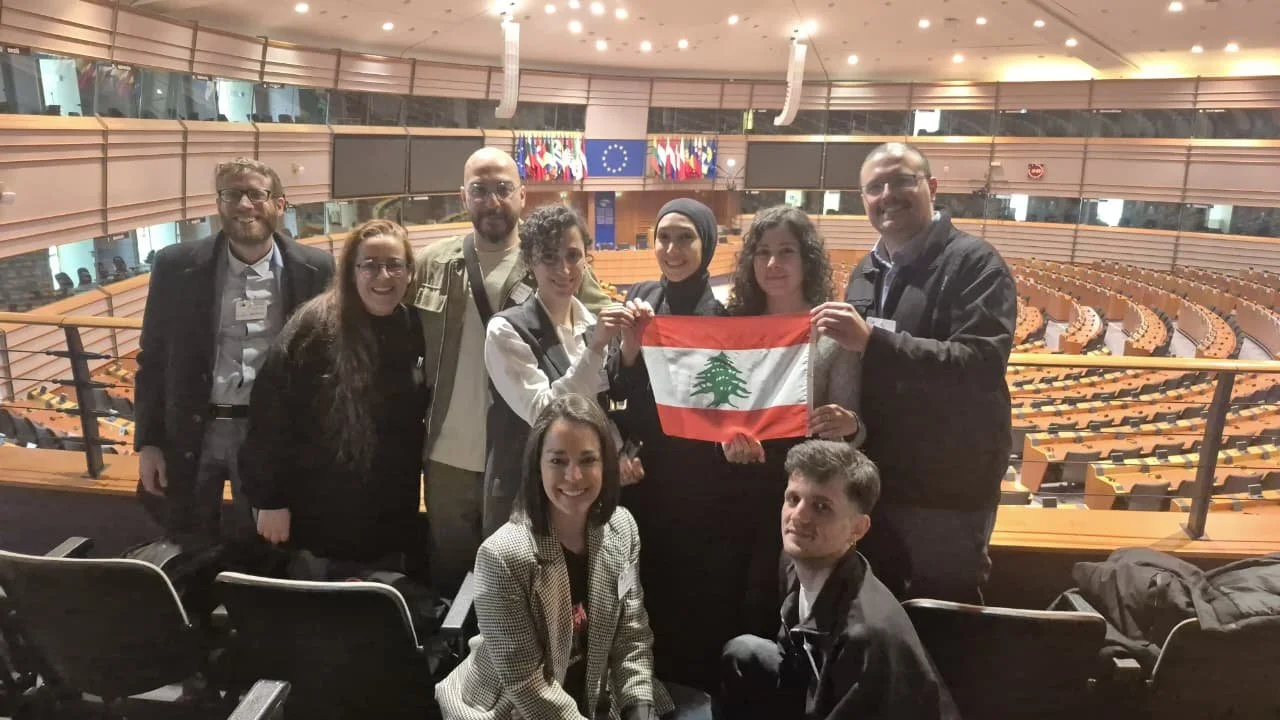
Beyond legislation, one of the most meaningful outcomes of these international exchanges has been the opportunity for AlNahda to build strong relationships with like-minded political actors worldwide working toward similar goals, including the political parties stated earlier, with which we now hold strong professional and personal bonds.
Al Nahda Lebanon together with PACMA (Spain), Adan (Morocco), and Hakim (Turkey), raising the Lebanese flag inside the European Parliament in a moment of solidarity with Lebanon during these difficult times, and standing together for animal rights and international cooperation.
Each year, we come together to exchange ideas, coordinate strategies, and support one another’s work. This creates a genuinely collaborative and increasingly effective international movement.
Overall, these experiences have shown us that political advocacy for animals is both growing and impactful. It is not theoretical—it is already producing real changes on the ground, and it continues to expand through cooperation, persistence, and shared purpose.
Party for the Animals in the Netherlands has been the key entity in making all of this happen.
4. How do you envision cooperation between Al Nahda, civil society organizations, and other political parties in Lebanon to push for systemic change and new legislation?
Advancing new legislation and driving systemic change cannot be achieved in isolation. It requires broad support, strategic alliances, and sustained cooperation across multiple sectors of society.
For this reason, Al Nahda is open to collaboration with all civil society organizations, NGOs, and shelters working toward similar goals. We see these partnerships as essential, particularly because, in principle, governments are responsible for supporting such organizations through public funding derived from tax revenue. Strengthening cooperation between political actors and NGOs is therefore crucial in order to ensure that animals receive the protection, care, and resources they need to survive and thrive.
At the political level, regardless of our core structural differences, engagement with other parties in Lebanon is also necessary, even if previous experiences have shown that animal rights are not always a priority within the existing political agenda.
During the 2022 Lebanese elections, Al Nahda participated in the electoral process, which provided important insights into the priorities of other political forces, many of which were not focused on animal welfare legislation.

Nevertheless, Al Nahda remains committed to working with any political party willing to engage on these issues. Legislative change requires approval and cooperation across multiple parliamentary components, and meaningful progress can only be achieved through dialogue and coalition-building.
What distinguishes Al Nahda in this regard is its commitment to unity rather than division. The movement seeks to bring together different actors, civil society organizations, NGOs, and political parties, around a shared framework of justice and legislative reform. Rather than excluding potential partners, Al Nahda aims to create common ground wherever possible in order to advance animal protection laws and broader ethical reforms.
5. How can you inspire a new generation to see activism not as separate causes but as one unified movement against injustice?
Al Nahda is, by definition, an intersectional movement. Our core principles are human rights, animal liberation, and nature preservation, and we believe these causes are not separate struggles, but interconnected dimensions of the same pursuit of justice.
Taking care of nature is ultimately taking care of both animals and humans. Protecting ecosystems means protecting the habitats and survival of countless living beings, including ourselves. Likewise, caring about human well-being should naturally lead to greater compassion toward animals, because the more conscious and ethically aware humanity becomes, the less suffering it will inflict on other sentient beings. In the same way, reducing violence toward animals contributes to a healthier and more compassionate world for humans as well.
For us, this interconnectedness is becoming increasingly evident, especially among younger generations. More people are beginning to understand that activism cannot remain fragmented if it truly seeks justice. Defending human rights while destroying the environment is contradictory. Protecting nature while ignoring violence toward animals is also incomplete. Justice loses coherence when compassion is applied selectively.
This is why Al Nahda sees intersectionality not simply as a political concept, but as the most coherent and effective path toward justice. The suffering of humans, animals, and the destruction of nature are deeply interconnected, and meaningful change requires addressing them together rather than in isolation.
Ultimately, activism should not be seen as separate causes competing for attention, but as one unified movement against injustice in all its forms.
Conclusion
Georges Achkar Salame’s journey reflects a rare consistency of vision: justice that is indivisible, extending to humans, animals, and nature alike. Through Al Nahda, he has sought to transform this philosophy into political action, building bridges with civil society, engaging internationally, and pushing for legal reform in Lebanon.
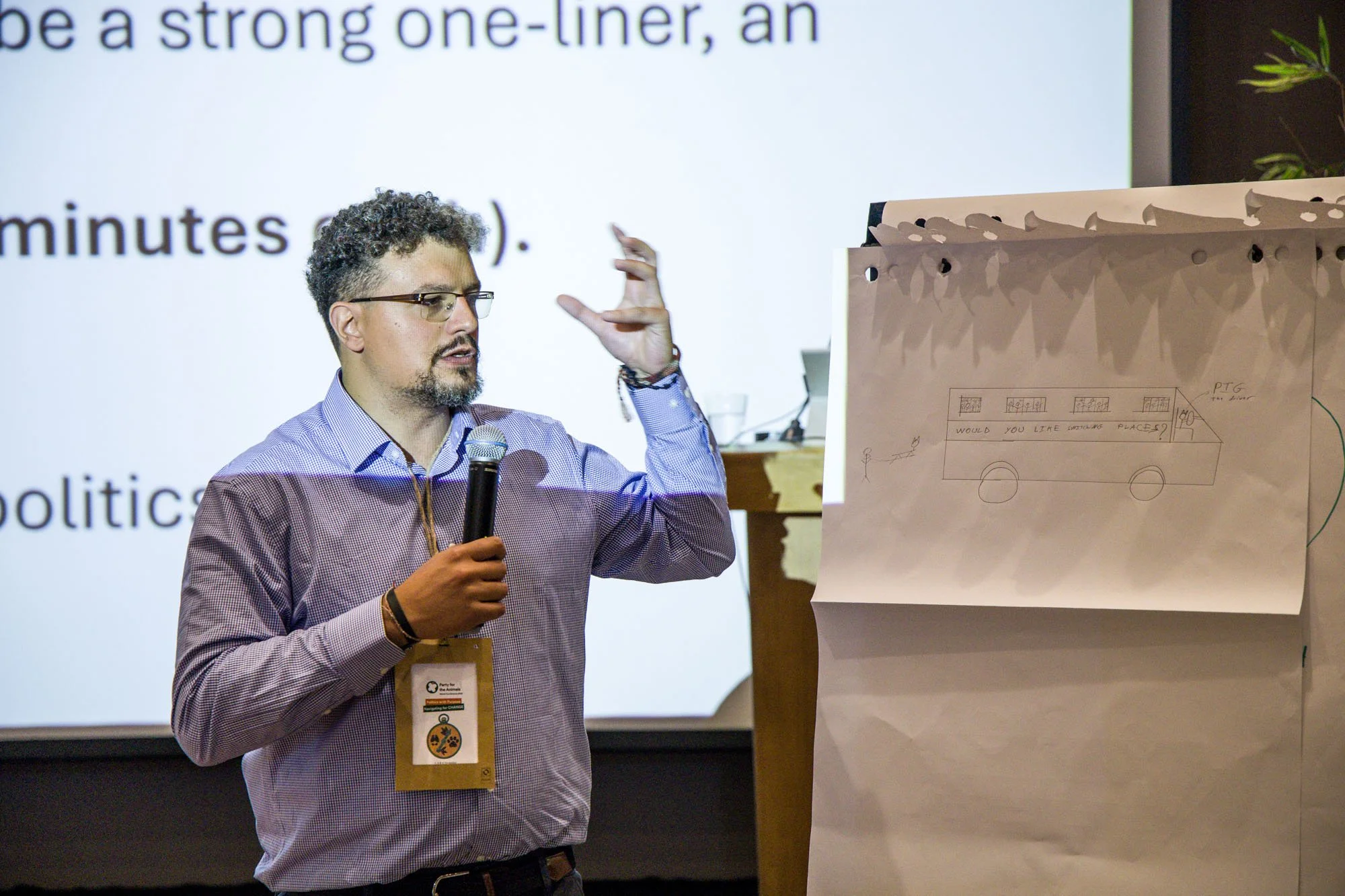
“No matter how difficult the times become, hope remains alive in the hearts of those who believe in change. Our turn will come, and with it, a brighter, more compassionate, and more peaceful future.” - Georges Achkar Salame
His words remind us that activism is not a collection of separate causes but a unified struggle against injustice in all its forms. Whether through grassroots campaigns, international cooperation, or political engagement, Georges continues to embody the belief that compassion and justice must guide the future.
For the Middle East Vegan Society, Georges’ voice is a call to action, urging us to see beyond divisions and to work together for a brighter, more compassionate, and more peaceful world.