

From Cairo’s Streets to the World: Egypt’s National Dish Koshary, a Naturally Vegan Delight
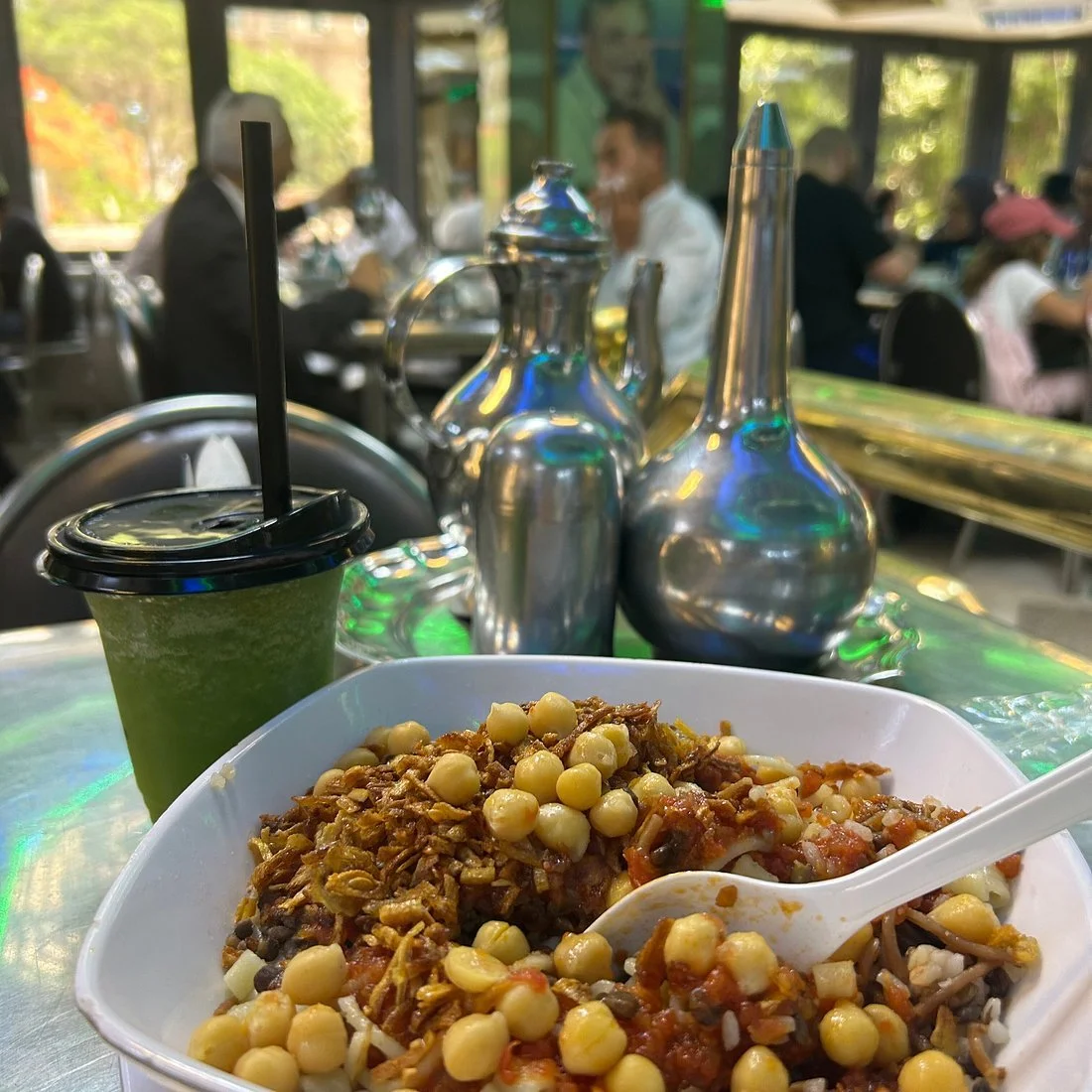
If you wander through the bustling, sun‑drenched streets of Cairo, one sound will inevitably draw your attention: the metallic clanging of spoons against heavy aluminum bowls. This is the unmistakable rhythm of a Koshary shop, where cooks move with remarkable speed to assemble Egypt’s most beloved dish. Recognized by UNESCO as part of Egypt’s Intangible Cultural Heritage, Koshary is more than a meal; it is a cultural symbol, a story of resilience, and a celebration of flavors that have traveled across continents before finding their perfect harmony in Egyptian kitchens.
A Naturally Vegan Tradition
Koshary is a dish that surprises many visitors because it is, and always has been, entirely vegan. Built on layers of grains, legumes, pasta, and sauce, it is a masterclass in resourcefulness. Its origins stretch back centuries, when lentils and rice were staples for laborers along the Nile. These ingredients were valued not only for their affordability but also for their ability to sustain workers through long hours in the heat. While some theories suggest that British troops introduced the rice‑and‑lentil combination from India in the nineteenth century, Egyptian food historians emphasize that variations of grain‑and‑legume mixtures were already deeply rooted in local tradition.
Global Influences, Egyptian Genius
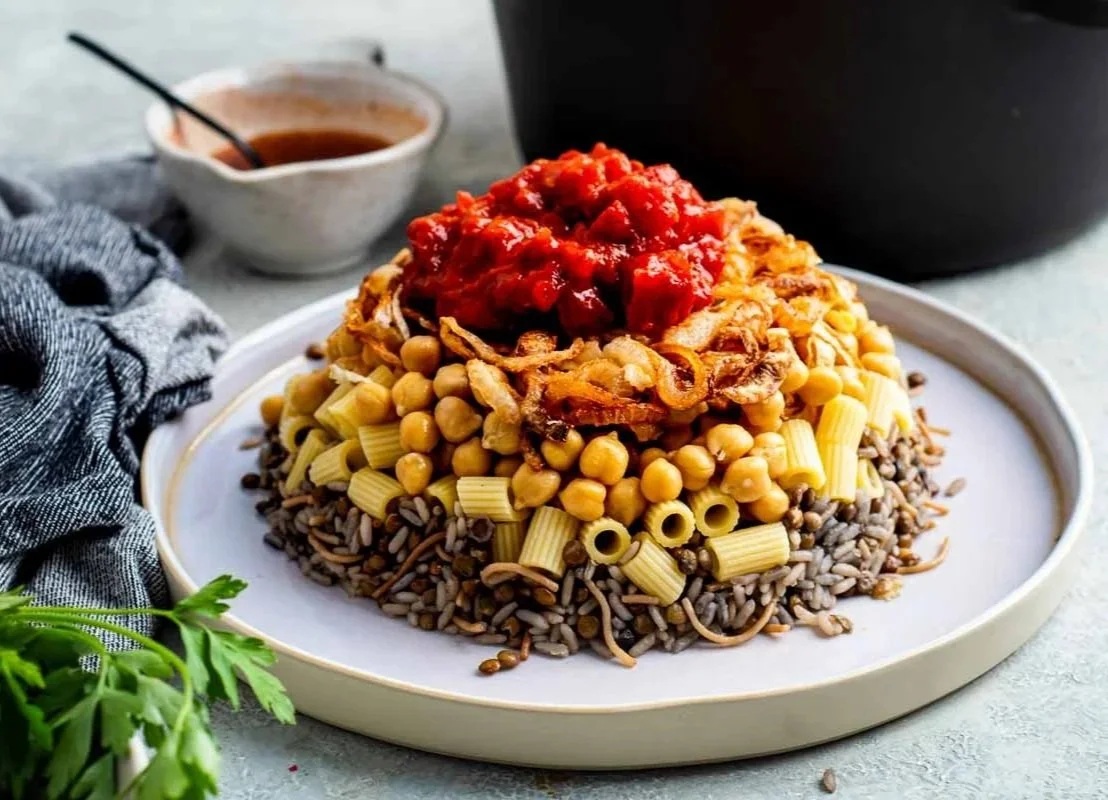
Over time, Egypt’s openness to global exchange enriched the dish further. Italian immigrants brought pasta, most notably short macaroni and toasted vermicelli, which blended seamlessly with the existing base of rice and lentils. Egyptian street vendors then added their own genius touch: a mountain of crispy fried onions and a sharp, garlicky tomato sauce spiked with vinegar. These elements transformed Koshary into the layered, aromatic dish that has become a national treasure.
The Art of Making Koshary
Preparing Koshary at home may seem daunting because it requires several pots working at once, yet the process is straightforward. Onions are thinly sliced and fried until golden, their oil reserved for later steps. Lentils and rice are boiled with cumin and garlic, while vermicelli is toasted until it turns golden before being combined with the grains. Macaroni is cooked separately until al dente. The sauce begins with garlic sautéed in onion oil, followed by tomato paste and crushed tomatoes, seasoned with cumin, coriander, and a pinch of Baharat, the warm Middle Eastern spice blend that includes allspice, cinnamon, and cloves. Once thickened, the sauce is ready to crown the dish.
The art of serving Koshary lies in its architecture. The lentil‑rice‑vermicelli mixture forms the foundation, macaroni is scattered across the grains, and the tomato sauce is spooned generously down the center. Chickpeas are placed around the edges, while the centerpiece is crowned with a massive handful of crispy onions. The secret to authentic flavor is the reuse of the same onion oil across multiple steps, binding the dish together with a deep, savory richness. On the side, diners are offered Daqqa, a bright sauce of garlic, cumin, and vinegar or lemon juice, and Shatta, a fiery chili oil, allowing each person to adjust the flavor to their liking.
Koshary is more than a comfort food; it is a cultural bridge. It embodies Egypt’s history of exchange, resilience, and creativity, while remaining accessible to all. Born as street food, it continues to be affordable and democratic, served in humble shops and celebrated in homes alike.
A Dish That Connects Past and Present
In the end, Koshary is not just Egypt’s national dish; it is a story told through flavor, a living archive of the country’s history, and a testament to the creativity of its people. It connects past and present, reminding us that traditions can be both timeless and adaptable, and that plant‑based heritage has always been part of the Middle Eastern table. More than comfort food, Koshary is a vegan delight that speaks to Egypt’s identity and continues to resonate far beyond Cairo’s streets, offering nourishment, belonging, and inspiration to a global audience.