

How to Survive Ramadan as a Vegan While Inspiring Others
Ramadan is a month of reflection, discipline, and community. For vegans, it is also a chance to live values of compassion and sustainability while participating fully in traditions. With thoughtful planning and social engagement, it is possible not only to thrive physically and spiritually but also to inspire others through the richness of plant-based living.
The day begins with Suhour, the pre-dawn meal that sustains you through the fast. Traditional staples such as ful medames, flatbreads, olives, and fresh vegetables can easily be enjoyed in vegan form. Legumes like fava beans, lentils, and chickpeas provide protein and slow-release energy, while fruits such as watermelon, figs, and dates help maintain hydration. A simple bowl of overnight oats with almond milk, chia seeds, and walnuts can also be a nourishing option.
When the fast is broken at Iftar, tradition calls for dates and water. Lentil soup, fattoush, and tabbouleh are refreshing and nutrient-rich starters, while main dishes such as yalanji, stuffed vine leaves with rice and vegetables, falafel, or couscous with vegetables provide heartier sustenance. A balanced plate that combines bulgur or rice, beans, and healthy fats from olive oil or tahini ensures recovery after a long day of fasting. For those who enjoy experimenting, tofu or tempeh can be added as extra sources of protein, though the richness of regional dishes already offers plenty of variety.
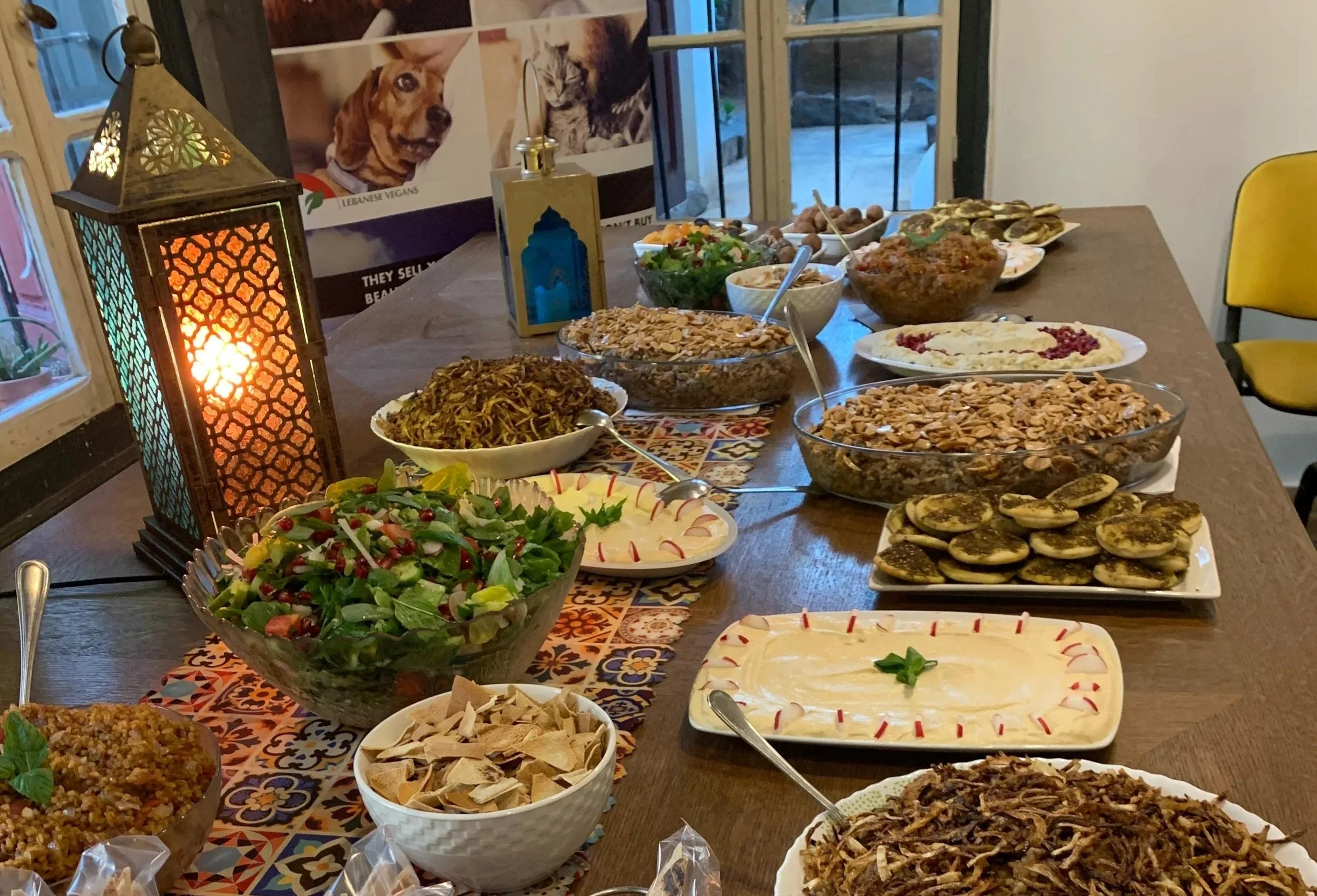
Image from the Interfaith Green Iftar at Lebanese Vegans Social Hub 2023
Invitations to Iftar are central to Ramadan, and they are opportunities for vegans to share values and build bridges. Communicating dietary choices early allows hosts to prepare with clarity, and offering to contribute a dish ensures inclusion while introducing others to vegan options. Gratitude should always come first, and many tables already feature naturally vegan dishes such as hummus, baba ghanoush, tabbouleh, and yalanji. By participating fully and positively, you normalize vegan presence at Ramadan gatherings. Imagine bringing a tray of yalanji to a family Iftar, enjoying lentil soup and salads alongside others, and when asked about your choices, explaining that fasting is also about extending mercy to animals. In that moment, tradition and compassion coexist beautifully, and your presence becomes a gentle form of advocacy.
Equally important is the opportunity to host. Inviting friends, family, or colleagues to a vegan Iftar can be transformative. It allows you to showcase the richness of plant-based cuisine, from lentil soups and stuffed vegetables to sweet endings like qamar al‑din (apricot drink) or vegan rice pudding. A vegan Iftar is not only inclusive but also a living demonstration that Ramadan traditions can be celebrated without compromise. Guests often leave surprised by the abundance and flavor, and the experience plants seeds of curiosity and respect for compassionate eating. Hosting becomes a form of cultural and ethical leadership, showing that veganism is not about exclusion but about expanding the circle of mercy and hospitality.
Throughout the month, staying nourished requires attention to variety. Beans, lentils, chickpeas, nuts, and seeds provide protein. Dark leafy greens, tahini, and fortified plant milks supply iron and calcium. Whole grains, legumes, and fresh vegetables deliver fiber and magnesium. Even desserts can be compassionate, with date-based sweets, basbousa made with plant milk, or vegan rice pudding offering indulgence without compromise.
Practical strategies make the journey smoother. Cooking in batches and freezing soups, stews, or stuffed vegetables saves time and effort. Drinking water steadily between Iftar and Suhour helps maintain hydration, while avoiding caffeine prevents unnecessary dehydration. Sharing vegan dishes at gatherings not only ensures inclusion but also normalizes compassionate choices. And mindful eating, resisting overindulgence even with vegan foods, keeps the spirit of discipline intact.
Surviving Ramadan as a vegan is not about restriction. It is about thriving physically and spiritually, engaging meaningfully with community, and inspiring others, whether at someone else’s table or at your own, to embrace compassionate choices.