

Vegan Festive Sweets: A Journey Through Middle Eastern Traditions
What do sweets mean in times of celebration? Why do certain flavors return each year, tied to rituals of joy, resilience, and hospitality? Across the Middle East, festive desserts such as Meghli, Maakaron, Qamhiyeh, Maamoul, and Zlabia are more than indulgence. They are memory, community, and continuity. They ask us: how do flavors carry stories, how do they connect us to one another, and how might they evolve when compassion guides our choices?
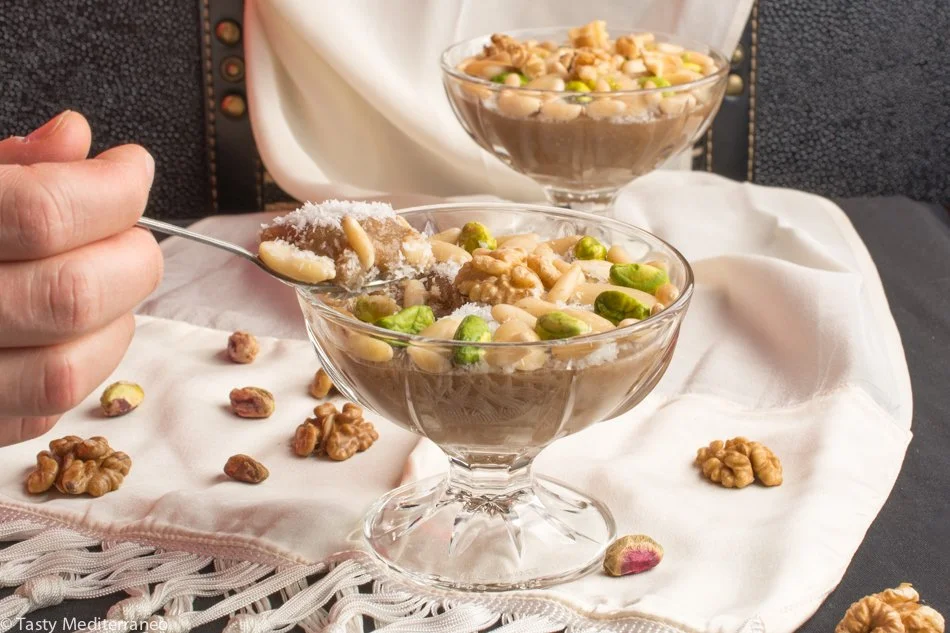
Among the most cherished festive delights is Meghli, a spiced rice pudding prepared to mark the birth of a child and shared during gatherings. Its fragrance of caraway, cinnamon, and anise fills homes with warmth, while the topping of coconut and nuts symbolizes abundance and joy. Meghli is vegan by default, a reminder that tradition and compassion can coexist naturally.
Another sweet that carries deep meaning is Maakaron, crisp pastries fried until golden and soaked in syrup scented with orange blossom. Often linked to communal feasts and family celebrations, Maakaron embodies hospitality and resilience. Shaped with molds or even improvised tools like a cheese grater, it is a dessert that celebrates creativity as much as community, and its plant-based ingredients make it a delight that needs no reimagining.

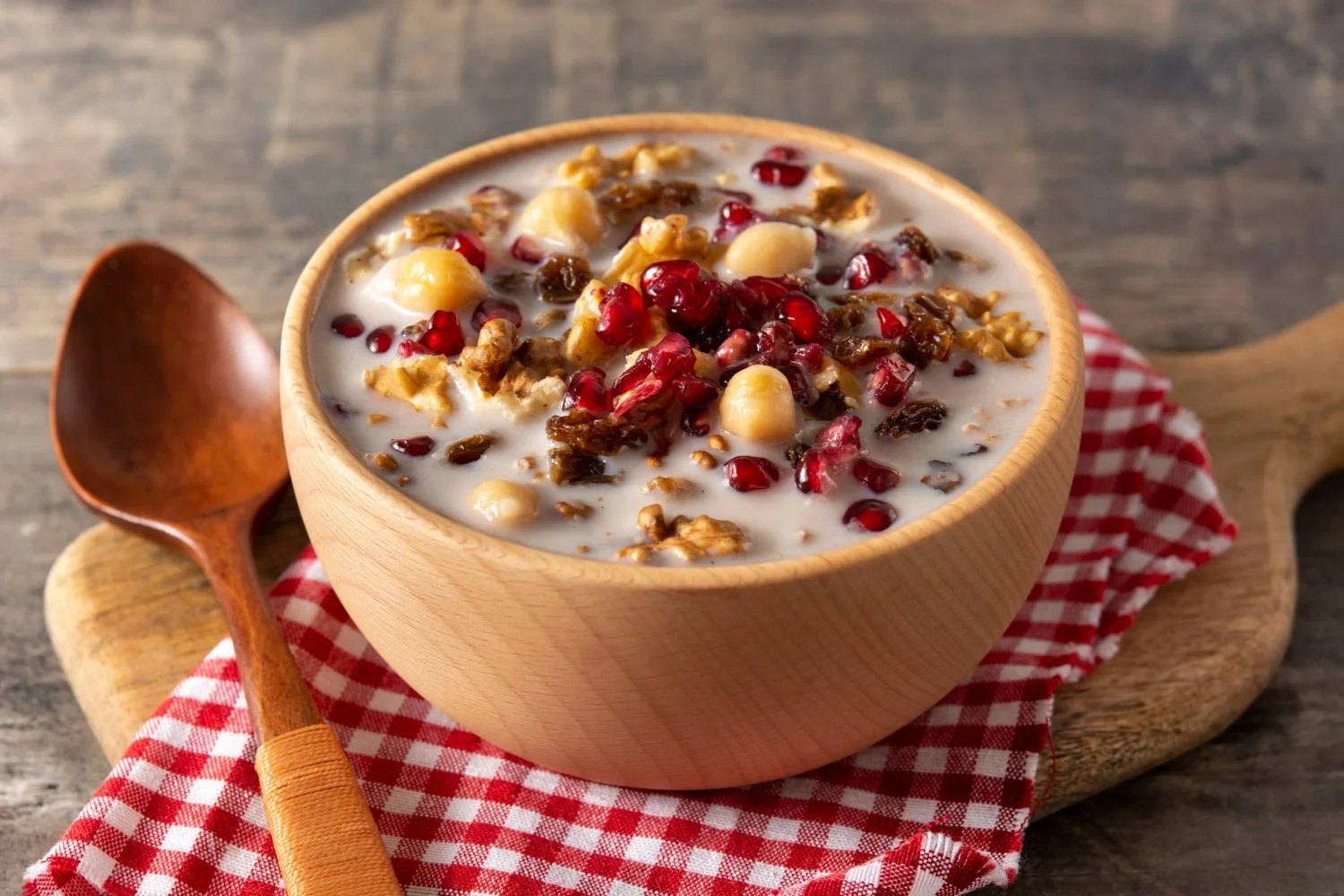
Equally symbolic is Qamhiyeh, the boiled wheat sweet prepared during festive occasions. Wheat has long represented abundance and fertility, and this dish, flavored with anise or caraway and sweetened with syrup, is shared in bowls among family and neighbors. Vegan by nature, Qamhiyeh is a dish of resilience, reminding us that simplicity often carries the deepest meaning.
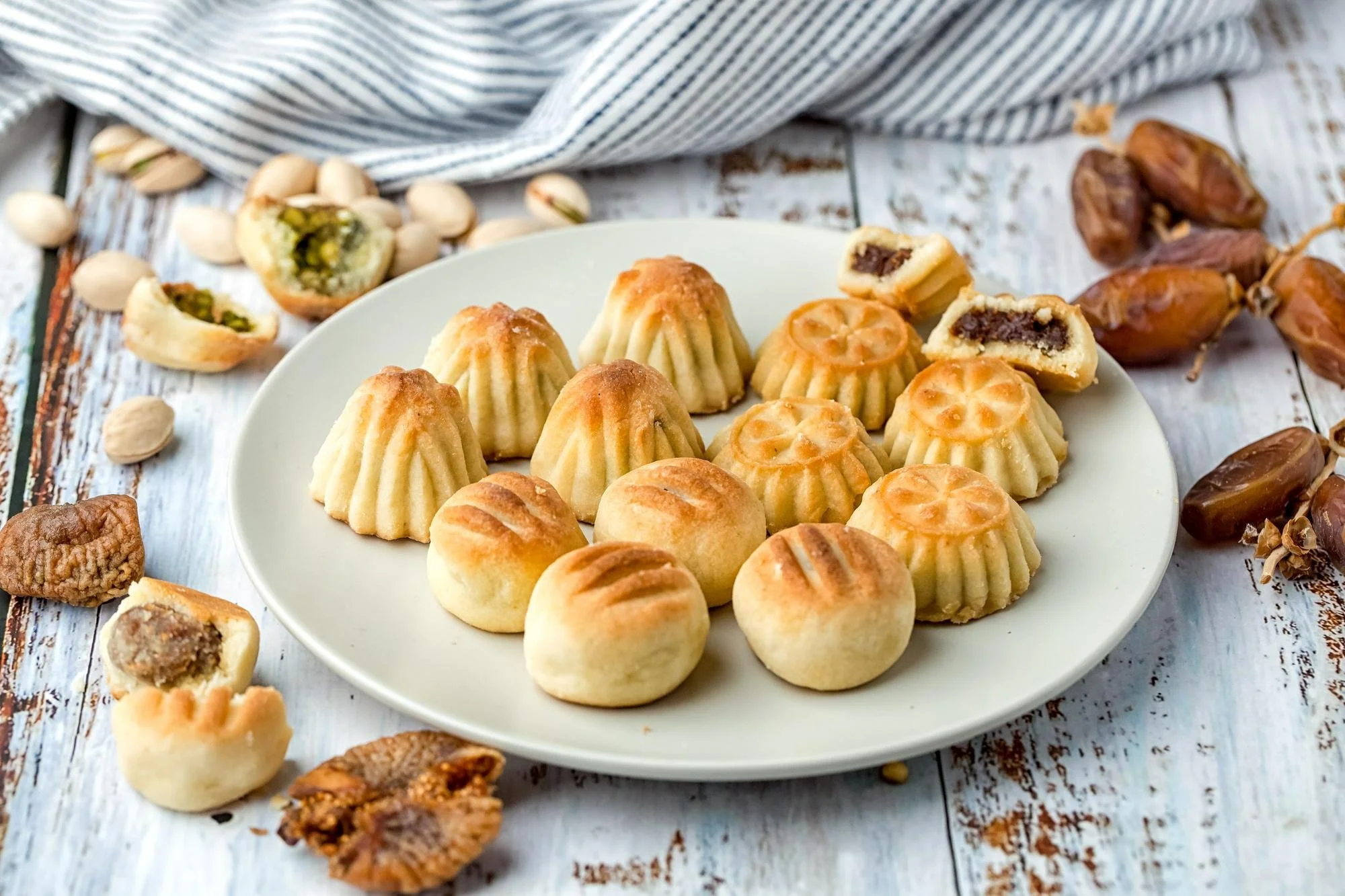
No festive table would be complete without Maamoul, shortbread cookies filled with dates, nuts, or figs. Iconic across holidays and celebrations, Ma’amoul is shaped with wooden molds, dusted with powdered sugar. Traditionally made with semolina dough and natural fillings, it is also perfectly suited to plant-based butter, which gives the pastry its tender crumb while keeping it compassionate and ethical.
Finally, there is Zlabia, golden fritters dipped in syrup and shared during festive gatherings. Fried fresh and served warm, Zlabia embodies abundance and joy, a dessert that turns simple ingredients into a communal celebration. Prepared with flour, yeast, sugar, and plant-based oil, it is festive, ethical, and naturally vegan.

These Middle Eastern festive sweets remind us that sweetness lies not only in taste but in the act of sharing. Vegan by default, they show how compassion has always been part of tradition. They invite us to celebrate ethically, savoring joy in ways that honor both heritage and kindness.