

Brazil has opened a new route for live animal exports to the Middle East through the Port of Natal, in the country's northeastern region. According to The Animal Reader, more than 6,000 animals have already been transported through the new route, with shipments destined for Saudi Arabia and Egypt. These cattle face journeys lasting several weeks aboard livestock carriers. Animal-welfare investigations have documented overcrowded conditions, restricted movement, accumulated feces and urine, injuries, illness, and deaths during long-distance sea transportation. Meanwhile, Brazil's Port of Natal authority estimates that the new operations could generate approximately R$24 million in economic activity.
Among the shipments was a consignment of 2,350 cattle that departed on October 28 aboard the livestock carrier NORLAND, bound for Saudi Arabia. After approximately 24 days at sea, the vessel arrived in Jeddah on November 21, following reported stops in Cartagena, Spain, and Egypt.
The Welfare Risks of Long-Distance Sea Transportation
Transporting thousands of cattle across international waters exposes animals to prolonged confinement aboard vessels designed to carry large numbers of livestock. During journeys that can last two to three weeks or longer, animals have limited space to move, and their ability to walk, turn around, or lie down comfortably may be restricted.
Animal-welfare organizations have documented problems associated with these voyages, including heat stress, injuries, illness, exhaustion, and the accumulation of urine and feces in animal pens. Ventilation, access to sufficient food and clean water, and the availability of veterinary care are also important factors affecting animals' welfare during transportation.
A 2024 report by the Animal Welfare Foundation and French organisation Robin des Bois examined 64 livestock carriers approved for animal transportation in the European Union. It found that the average age of the vessels was 43 years, while 94% had been converted from other types of ships rather than originally constructed to transport live animals.
The report also identified widespread technical deficiencies across the fleet, including problems involving fire safety, emergency systems, life-saving equipment, pollution prevention, and working conditions.
The NORLAND was among the vessels examined in the report. Originally built in 1976 as a cargo ship, it was converted into a livestock carrier in 2010. Inspections conducted between 2019 and 2023 recorded deficiencies involving working conditions, propulsion systems, water and weather protection, emergency systems, and fire safety.
These inspection findings concern the vessel's recorded history and do not establish the conditions experienced by the cattle during its October 2026 voyage. However, they provide further context about the safety and maintenance concerns identified across the livestock shipping industry.
Spiridon II: When a Journey Becomes a Two-Month Ordeal
The risks associated with long-distance livestock transportation were particularly evident in 2025, when the livestock carrier Spiridon II departed Uruguay carrying 2,901 cattle, approximately half of them pregnant, bound for Türkiye.
After arriving at the port of Bandırma on October 22, Turkish authorities refused to allow the animals to be unloaded because of irregularities involving their identification and import documentation.
According to an investigation by the Animal Welfare Foundation and The Marker, inspections identified 58 cattle that had already died during the journey. Around 140 cattle had also given birth onboard, but only 50 calves were found, leaving 90 unaccounted for.
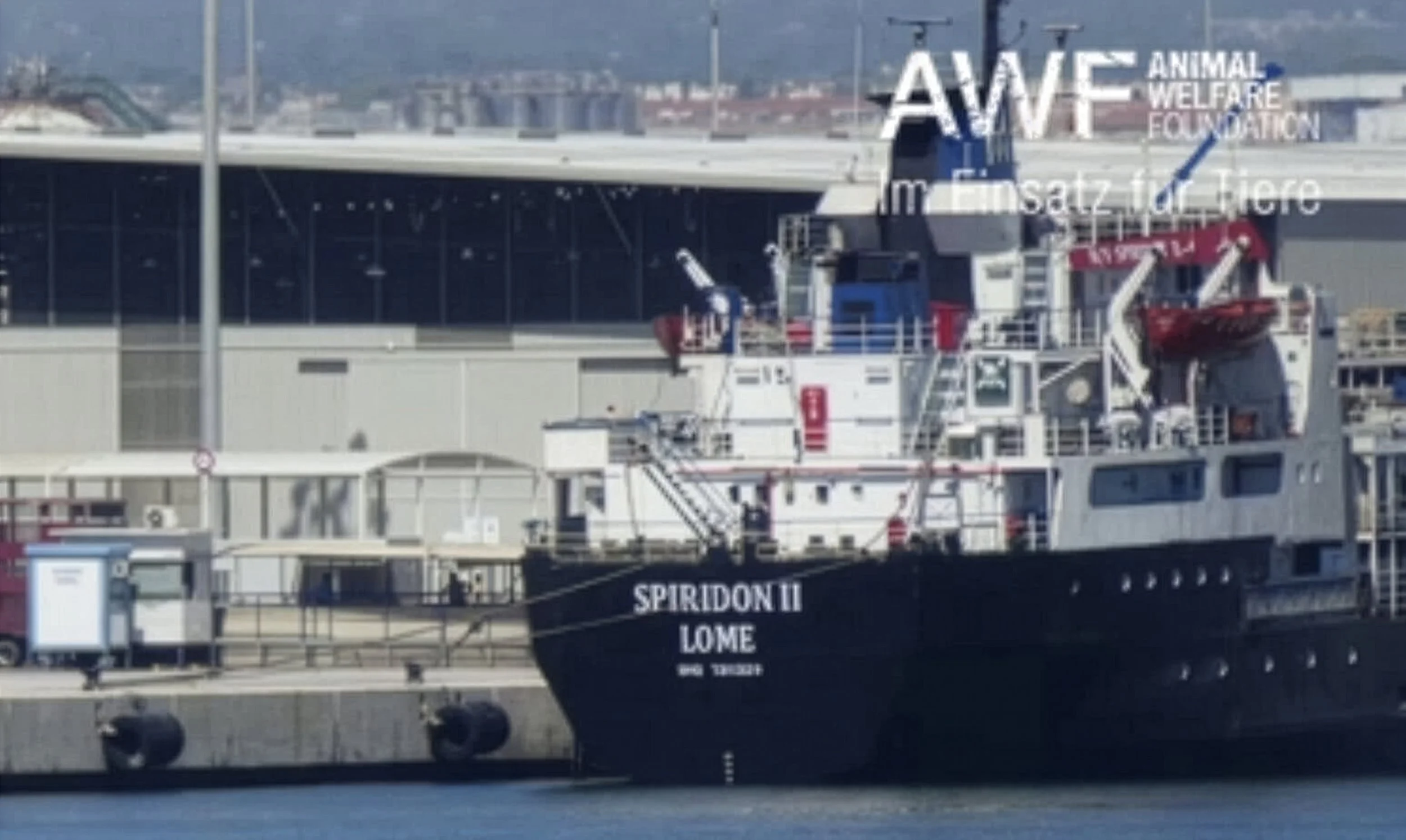
Livestock carrier Spiridion II, photo: Animal Welfare Foundation
The vessel remained off the Turkish coast for several weeks while the situation remained unresolved. During this period, more animals died, and residents near the port reported unpleasant odors and flies.
After leaving Türkiye in November, the vessel eventually reached Benghazi, Libya, where the surviving cattle were unloaded and sold after spending approximately two months aboard the ship.
Subsequent investigations revealed disturbing footage from inside the vessel, showing dead and injured animals, cattle covered in accumulated waste, and weakened newborn calves.
The incident demonstrated how administrative and logistical problems can prolong an already difficult journey, leaving animals trapped aboard a vessel for weeks beyond the original travel period.
The Expansion of Live Animal Exports
Brazil's new export route adds another channel to the international live animal trade, connecting South American livestock producers with markets in the Middle East.
The estimated R$24 million in economic activity associated with the new operations at the Port of Natal reflects the commercial scale of a trade involving thousands of animals transported across international waters before being slaughtered.
The continued expansion of live animal exports raises serious questions about the welfare of animals subjected to lengthy journeys and the risks they face throughout transportation.
As international demand for animal products continues to sustain this trade, transitioning towards plant-based food systems offers an alternative that does not require animals to be bred, transported across oceans, and slaughtered for food.