

Middle Eastern Mezze Traditions: A Hidden Plant-Based Abundance
The Middle East is often celebrated for its rich culinary heritage, but what is less acknowledged is how deeply plant-based traditions run through its kitchens. These traditions extend across North Africa as well, where grains, legumes, and vegetables form the foundation of daily meals. Central to this is the culture of mezze, the generous spread of small dishes meant for sharing. Meals are not centered on a single protein but on abundance through variety, with hummus, tabbouleh, baba ganoush, falafel, couscous, and zaalouk forming the heart of the table. This communal approach, paired with fertile climates and a reliance on olive oil, fresh produce, and aromatic herbs, has created a cuisine where compassion and flavor coexist effortlessly.
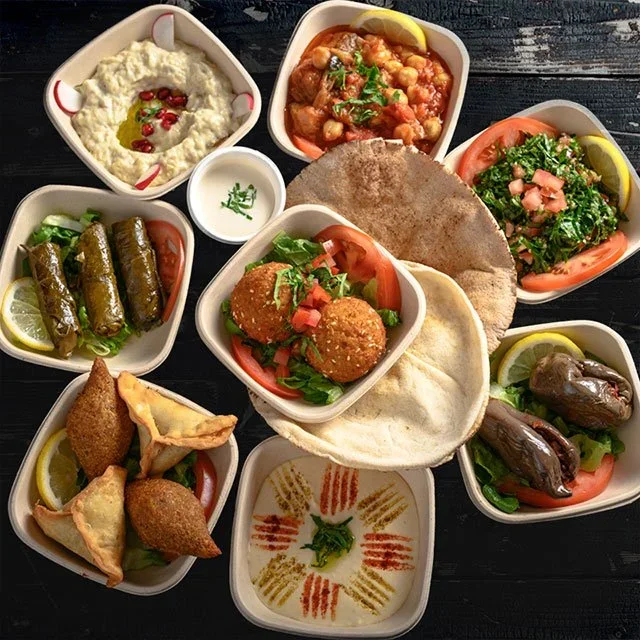
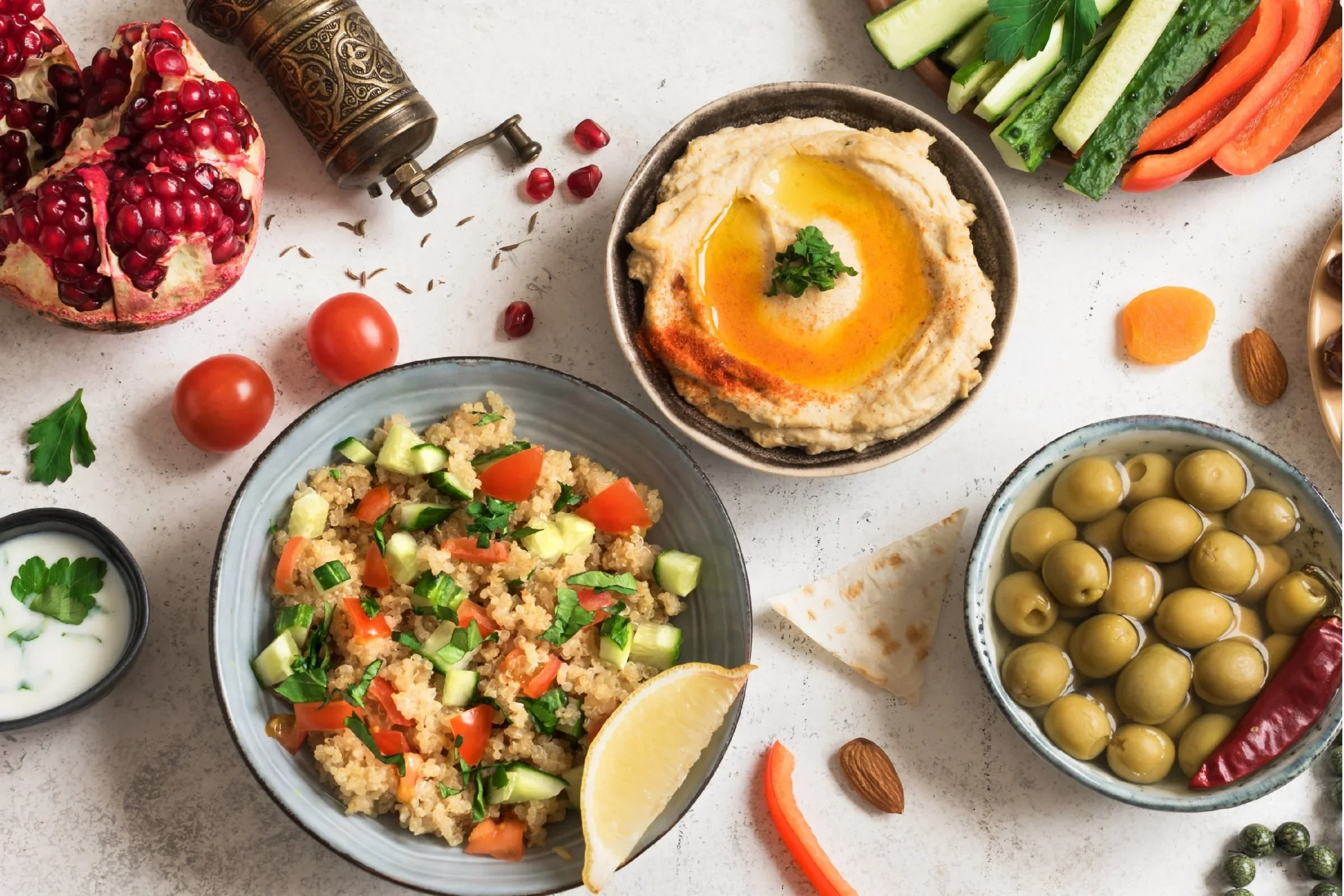
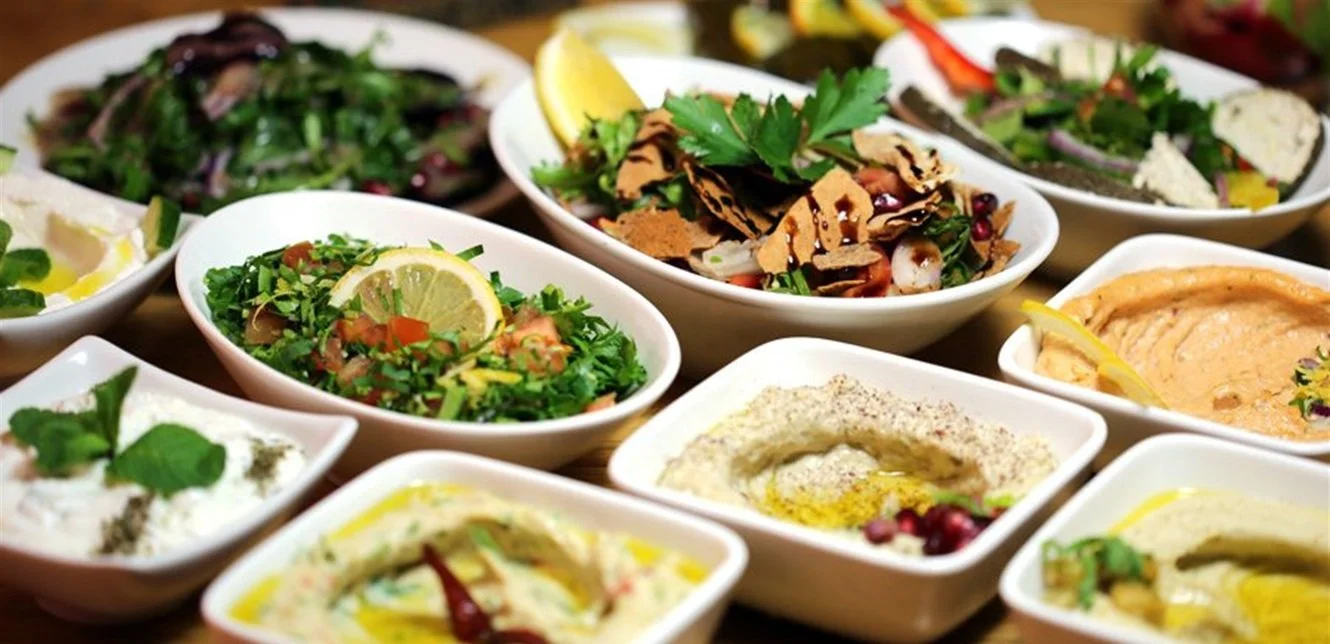
Lebanon offers a vivid example of this abundance, with tables filled with hummus, tabbouleh, falafel, and stuffed grape leaves, dishes that are also beloved across the Levant and beyond. The same spirit of variety and plant-based richness runs through Syria, where lentils and bulgur anchor comforting meals, and Jordan, where chickpeas, tahini, and tomato stews are staples. In Palestine, the tang of sumac and handmade couscous adds distinctive flavor, while Egypt is renowned for its fava bean traditions, and Iraq brings depth with hearty vegetable stews and vibrant pickles. Each country contributes its own twist, yet they all share a common thread: food that is vibrant, satisfying, and often entirely plant-based. Far from being a modern adaptation, these traditions reflect centuries of culinary practice, woven into the very fabric of daily life across the region.
In Syria, dishes like mujadara, lentils and bulgur topped with caramelized onions, show how simple ingredients can create comfort and nourishment. Yalanji, grape leaves stuffed with rice, herbs, and pomegranate molasses, offers a tangy bite that is entirely plant-based. Jordanian kitchens highlight fatteh, a layered dish of toasted bread, chickpeas, and tahini, alongside galayet bandora, a tomato stew enriched only with garlic and olive oil. Palestine celebrates maftoul, a handmade couscous often paired with chickpeas and vegetables, and musakhan, flatbread topped with onions, sumac, and olive oil, which in its vegan form captures the essence of the land without relying on animal-based ingredients.
Egypt’s culinary heritage is equally rich in plant-based staples. Its national dish, koshari, combines lentils, rice, pasta, and tomato sauce, crowned with crispy onions. Ful medames, slow-cooked fava beans with olive oil and lemon, is a breakfast staple eaten daily by millions. Ta’ameya, Egypt’s version of falafel, is made from fava beans rather than chickpeas, giving it a distinctive flavor and texture. Iraq contributes bulgur mujadara, hearty vegetable stews like salona, and torshi, pickled vegetables that add brightness to nearly every meal.
These traditions extend seamlessly into North Africa, where plant-based abundance is equally central. In Morocco, zaalouk, a smoky eggplant and tomato dip, and vegetable couscous showcase the region’s reliance on grains, legumes, and seasonal produce. Harira, a lentil and chickpea soup often eaten during Ramadan, is easily prepared without meat and remains a nourishing staple. Tunisia offers lablabi, a chickpea soup flavored with garlic, cumin, and olive oil, alongside mechouia, a grilled pepper and tomato salad rich in smoky depth. Algeria’s kitchens highlight couscous aux légumes, topped with chickpeas and seasonal vegetables, and h’miss, a roasted pepper and tomato salad dressed generously with olive oil.
This shared heritage across the Middle East and North Africa shows that plant-based eating is not a passing trend but a cultural constant. From mezze spreads to couscous feasts, from lentil stews to smoky dips, the region’s kitchens have long demonstrated that abundance, variety, and compassion can coexist on the same table.