

Abu al‑Alaʾ al‑Maʿarri: The Medieval Poet‑Philosopher Who Refused to Steal From Nature
Abu al‑Alaʾ al‑Maʿarri (973–1057 CE), the blind Syrian poet and philosopher from Maʿarrat al‑Nuʿman, is remembered as one of the earliest voices to reject the use of animals in every form. His stance was not about ritual or asceticism, but about justice. Through his poetry and his philosophical allegories, he articulated a vision that condemned food exploitation, labor exploitation, and unnecessary killing.
Al‑Maʿarri refused meat, dairy, eggs, and honey. He saw these as products created by animals for their own survival, not for human consumption. In his famous poem “I No Longer Steal From Nature”, he declared: “Do not unjustly eat fish the water has given up, and do not desire as food the flesh of slaughtered animals, or the white milk of mothers who intended its pure draught for their young… And do not grieve the unsuspecting birds by taking eggs; and spare the honey that the bees get industriously from the flowers of fragrant plants.” Here exploitation is framed as unjust theft. Milk belongs to calves, eggs to birds, honey to bees. Humans have no right to take them.
His sense of justice extended beyond diet. In Risālat al‑Ṣāhil wa‑l‑Shāḥij (The Epistle of the Horse and the Mule), written around 1021 CE, al‑Maʿarri gave voice to animals themselves. The horse laments: “We are the tribes of equus — hardships are thrown on our necks and attacks heaped on our backs.” By portraying animals as oppressed beings capable of grievance, he exposed the injustice of using them as tools and beasts of burden. This allegory is one of the earliest literary works to present animals as subjects of justice in their own right.
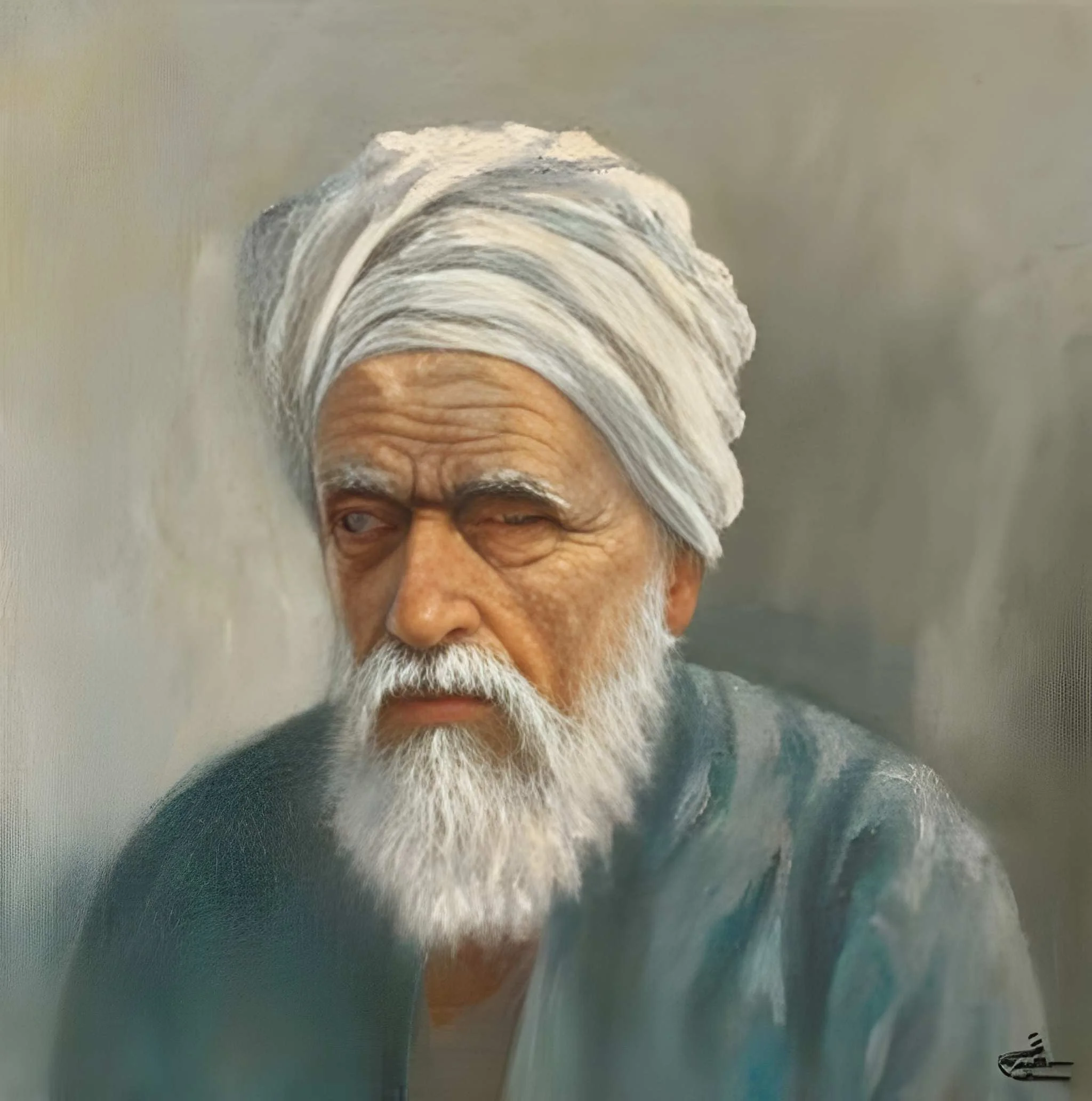
أبو العلاء المعري Abū al-ʿAlāʾ al-Maʿarrī,
full name أبو العلاء أحمد بن عبد الله بن سليمان التنوخي المعري
Abū al-ʿAlāʾ Aḥmad ibn ʿAbd Allāh ibn Sulaimān al-Tanūẖī al-Maʿarrī, born 973 CE / AH 363, died 1058 CE/ AH 449) was a blind Syrian philosopher, poet, and writer.
Al‑Maʿarri’s ethic was consistent. He even extended his principle of justice to the smallest beings. Medieval sources record that he argued sparing a flea was more virtuous than giving alms to humans. This radical statement reveals his conviction that justice applies to all creatures, regardless of size or perceived value. Killing a flea for convenience was, in his view, an act of injustice. Just as he condemned stealing milk, eggs, and honey, he condemned killing creatures for no reason. Both acts were framed as theft or injustice, taking what was not ours or ending a life without necessity. By extending his critique to insects, al‑Maʿarri demonstrated that his principle of justice was universal: no life should be taken or exploited for human gain. His stance was not sentimental pity but rational ethics. He argued that sparing even the smallest life was a higher moral act than human charity, because it upheld the principle of justice without compromise.
Abu al‑Alaʾ al‑Maʿarri’s philosophy was rooted in justice and rational ethics. He saw animals as sentient beings with their own purpose, not as resources to be consumed or used. His rejection of meat, dairy, eggs, honey, labor, and unnecessary killing makes him one of the earliest figures to articulate a consistent ethic against animal exploitation. More than a poet, he was a philosopher who lived faithfully to his principles, and his writings remain a striking example of how questions about justice toward animals were already being voiced in the medieval Middle East.