

From the Levant to the World: The Story of Stuffed Grape Leaves
Stuffed grape leaves are more than a dish; they are a story of migration, tradition, and shared heritage. The practice of wrapping grains in vine leaves dates back to ancient Mediterranean communities, where leaves were used to protect food and add flavor. By the fifteenth century, Ottoman palace kitchens had refined this tradition into delicate rolls of rice and herbs wrapped in tender grape leaves, simmered gently with olive oil and lemon.
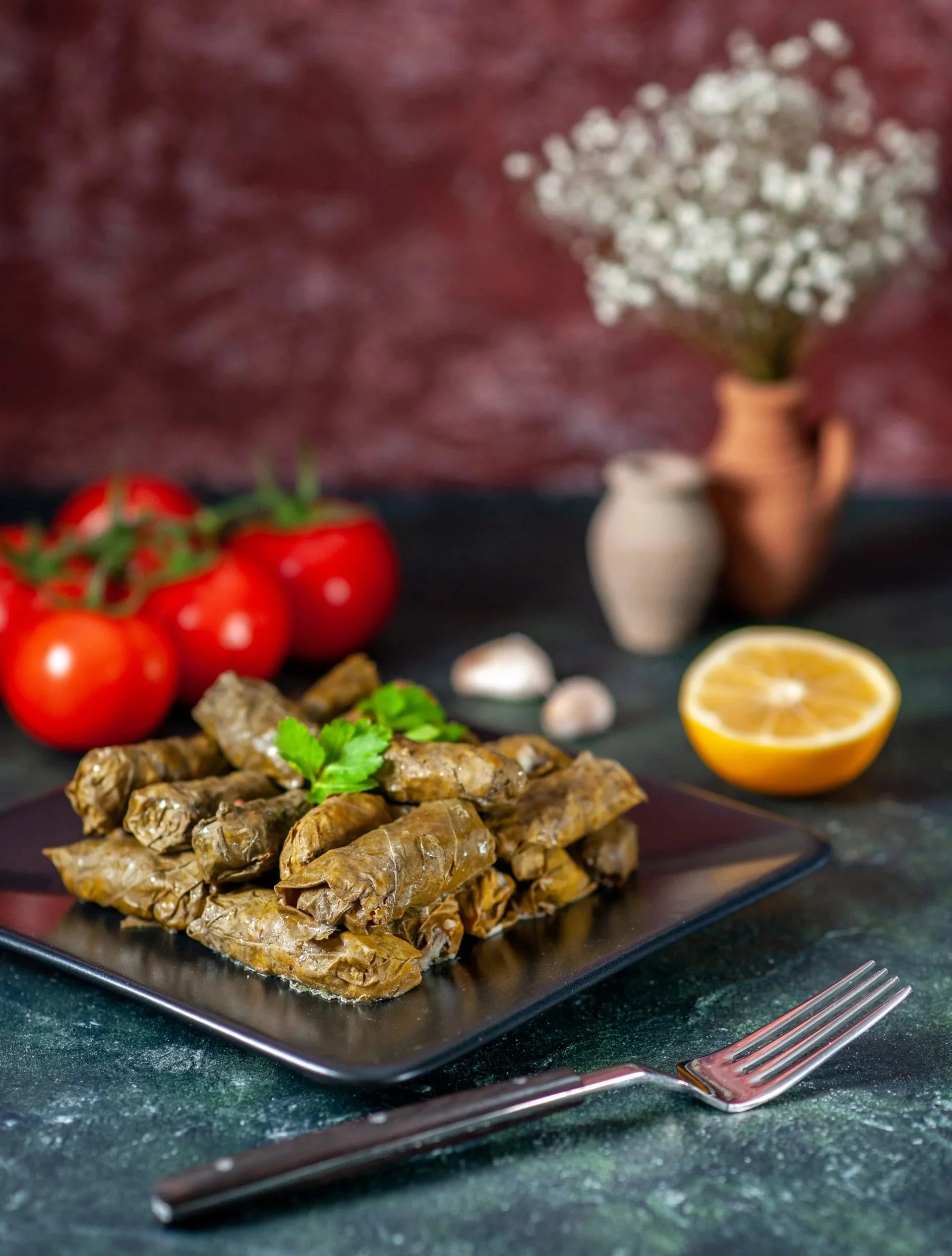
As the empire expanded, the dish traveled across regions and absorbed local identities. In the Levant and Egypt, it became known as waraq ‘inab or yabraq, a centerpiece of festive tables. In Palestine, waraq dawali is closely tied to the grapevine, a symbol of blessing and resilience, with families preserving spring leaves in brine or drying them to last through the seasons. In Iraq, dolma is prepared in generous platters, often layered with vegetables, and served at celebrations. Across Greece and the Balkans, the dish was embraced as dolmades or sarmades, infused with olive oil and lemon to highlight the region’s love for fresh herbs. In Armenia and the Caucasus, tolma became central to holiday meals, especially during spring festivals such as Nowruz. Rice, tomatoes, parsley, onions, mint, and olive oil form the classic filling, though regional creativity adds variety. In parts of Syria and Lebanon, bulgur replaces rice, giving the dish a nutty flavor and extra fiber. Greek versions often include pine nuts or currants. Families also preserve grape leaves in spring, ensuring the taste of the season can be enjoyed even in winter.
Beyond taste, stuffed grape leaves are deeply nourishing. The leaves themselves are rich in vitamins A, C, and K. Rice and bulgur provide complex carbohydrates for sustained energy, while olive oil contributes heart-healthy fats. Fresh herbs add antioxidants and digestive benefits, making the dish both wholesome and satisfying.
Yet stuffed grape leaves are not only about nutrition. They embody the spirit of hospitality, generosity, and community. Preparing them is often a family ritual, with generations gathered around the table to roll leaves together. Their presence at weddings, holidays, and communal meals reflects care and abundance, reminding us that food can be both sustenance and a bridge across cultures.
From the Levant to the Mediterranean and beyond, stuffed grape leaves continue to tell a story of resilience and connection. They are a timeless vegan tradition that unites people across borders, carrying with them the flavors of history and the warmth of shared heritage.